
As I was flipping through an old cookbook, the aroma of simmering vegetables transported me straight to a bustling street market in China. It’s here where I first encountered the delightful fusion of Napa cabbage with glass noodles—a dish that’s as vibrant as it is comforting. Today, I’m excited to share my recipe for Vegan Chinese Napa Cabbage with Glass Noodles, a healthy and quick meal that’s perfect for busy weeknights or cozy weekends alike. This dish not only satisfies your cravings for comfort food but also embodies a heartwarming connection to culinary traditions. Best of all, it’s easily adaptable for a vegan diet, ensuring everyone can enjoy its rich flavors. Curious about how to bring this taste of home to your kitchen? Let’s dive into the recipe!
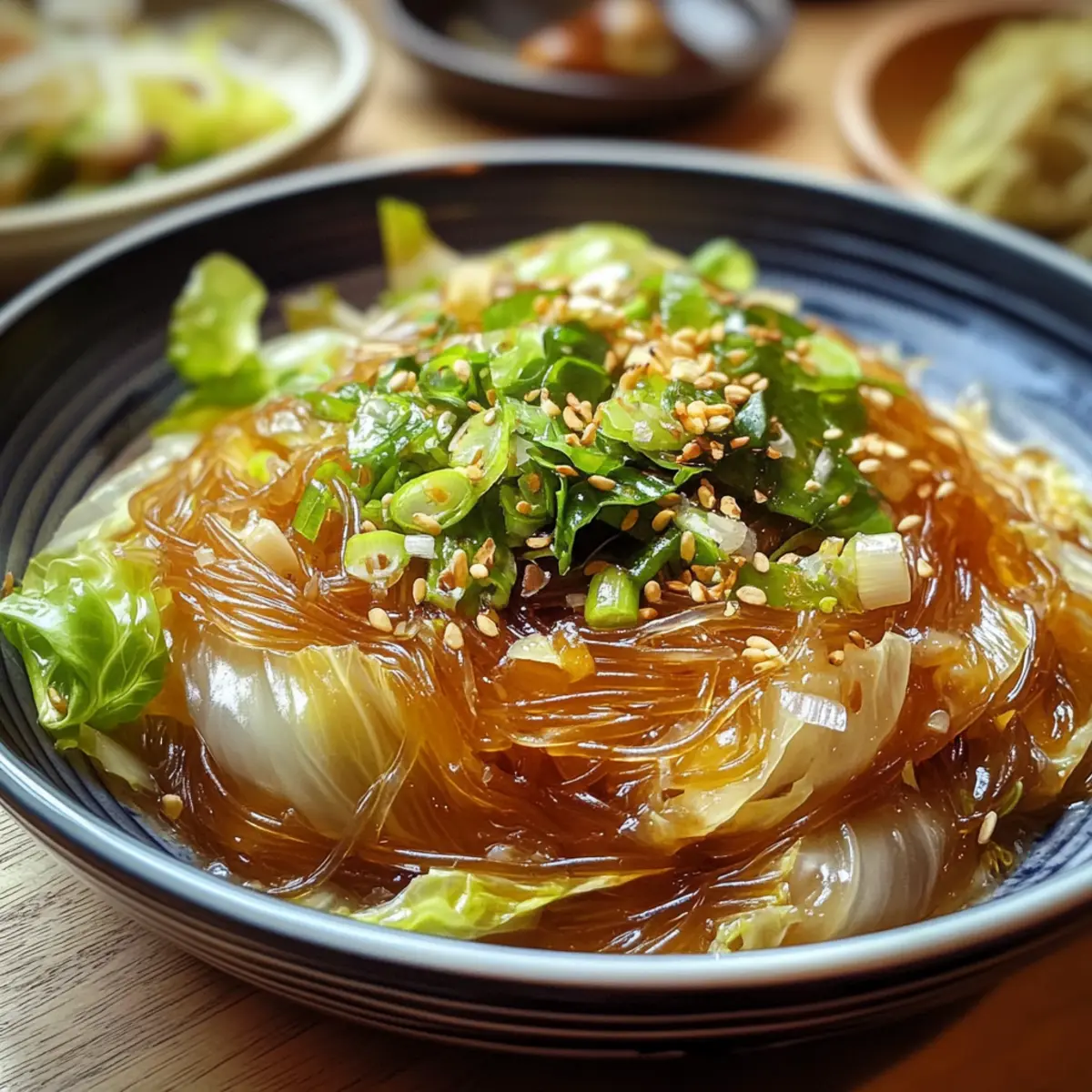
Why is Napa Cabbage So Special?
Versatile Comfort Food: This dish isn’t just delicious; it’s adaptable! You can enjoy it as a main meal or a side dish, making it perfect for any occasion.
Wholesome Ingredients: Packed with nutritious napa cabbage and chewy glass noodles, this recipe is a powerhouse of fiber and flavor, ensuring delightful bites in every spoonful.
Quick and Easy: With minimal prep and cooking time, you can whip up this meal in no time—ideal for busy evenings when you want something satisfying without the fuss.
Bold Flavors: The combination of soy sauce, ginger, and Sichuan peppercorns creates a flavor explosion that tantalizes your taste buds, providing a warm, aromatic experience.
Crowd-Pleasing: Whether you’re hosting a dinner or just cooking for yourself, this dish is bound to impress. Serve it with Napa Cabbage Tofu for a complete meal, and watch everyone come back for seconds!
Napa Cabbage Glass Noodle Ingredients
Get ready to create a delightful dish that will leave everyone asking for more!
For the Noodles
- Potato Noodles – These ensure a satisfying chewiness; try wide dried potato or sweet potato noodles for the best braising results.
For the Braising Base
- Napa Cabbage – A vital ingredient that transforms into a tender and subtly sweet addition, perfectly soaking up the flavors of the sauce.
- Soy Sauce – A key player for saltiness and umami; using a high-quality kind will boost this dish’s overall taste.
- Dark Soy Sauce – Provides depth and a captivating color; adjust to your liking for sweetness and richness.
- Oyster Sauce (or Chee Hou Sauce for vegan) – Delivers depth and richness, with Chee Hou Sauce being a fantastic vegan-friendly alternative.
- Sugar – Ideal for achieving balance; feel free to tweak the amount based on your taste.
For Sautéing
- Peanut Oil (or vegetable oil) – Perfect for stir-frying and adds richness; any neutral oil can do the job here.
- Sichuan Peppercorns – Imparts a unique citrusy aroma with a gentle numbness; use whole for flavor infusion unless you prefer a more intense taste by grinding them.
For Freshness and Flavor
- Green Onions – Adds a mild onion flavor and a burst of freshness; make sure to use both green and white parts for maximum impact.
- Ginger – Brings warmth and spice to the dish; freshly minced ginger is your best friend for that vibrant oomph.
Get ready to enjoy the heartwarming experience of Napa Cabbage Glass Noodles, a delightful comfort food that beautifully melds flavors!
Step‑by‑Step Instructions for Napa Cabbage Glass Noodle
Step 1: Prep Noodles
Begin by soaking the potato noodles in hot water for about 10 minutes until they become al dente. After soaking, drain and rinse them well under cold water to stop the cooking process. This step ensures that the noodles absorb the delightful flavors of the sauce once added to the napa cabbage later.
Step 2: Chop Cabbage
While the noodles soak, prepare the napa cabbage by first halving it and then cutting each half into quarters. Slice these quarters into bite-sized pieces, ensuring they’re uniform for even cooking. The fresh, crisp cabbage will transform into tender morsels, soaking up all the savory flavors during the braising process.
Step 3: Mix Sauce
In a small mixing bowl, combine the soy sauce, dark soy sauce, oyster sauce (or Chee Hou Sauce for a vegan option), and sugar. Whisk these ingredients together until the sugar fully dissolves. This sauce blend will create a rich, savory coating for the napa cabbage and glass noodles, enhancing the overall taste of your dish.
Step 4: Heat Oil
In a large skillet or wok, heat a generous amount of peanut oil over medium-high heat. To infuse the oil, add the Sichuan peppercorns and let them sizzle for about 30 seconds, ensuring they don’t burn. Afterward, remove the peppercorns and discard them, as their flavor will already be infused in the oil, bringing a delightful aroma to your dish.
Step 5: Sauté Aromatics
With the flavorful oil ready, add the chopped green onions and minced ginger to the skillet. Stir-fry these aromatics for about 30 seconds or until they become fragrant. This will elevate the flavor of your napa cabbage and create a delightful foundation for your dish.
Step 6: Cook Cabbage
Now, add the bite-sized napa cabbage pieces into the skillet. Stir them frequently for about 5 minutes, allowing the cabbage to wilt and reduce in volume. You’ll notice it softening beautifully; this step is crucial for ensuring the cabbage fully absorbs the savory sauce later on.
Step 7: Combine Ingredients
Pour your previously mixed sauce over the softened napa cabbage, then gently place the soaked potato noodles into the skillet as well. Stir everything together carefully, ensuring that the noodles and cabbage are well-coated in the sauce. Cover the skillet and let it cook for an additional 2-3 minutes, allowing the flavors to meld together and the noodles to warm through.
Step 8: Adjust Consistency
After the cooking time, uncover the skillet and use tongs to toss the ingredients. If the mixture appears too liquidy, increase the heat to medium-high and cook for an extra 1-2 minutes to thicken the sauce. The goal here is to achieve a luscious, well-coated consistency that clings to both the napa cabbage and glass noodles.
Step 9: Serve
Once everything is perfectly combined, transfer your Napa Cabbage Glass Noodle dish to a serving plate. Serve hot and enjoy this comforting meal that showcases the wonderful flavors and textures of napa cabbage and glass noodles, perfect for any occasion!
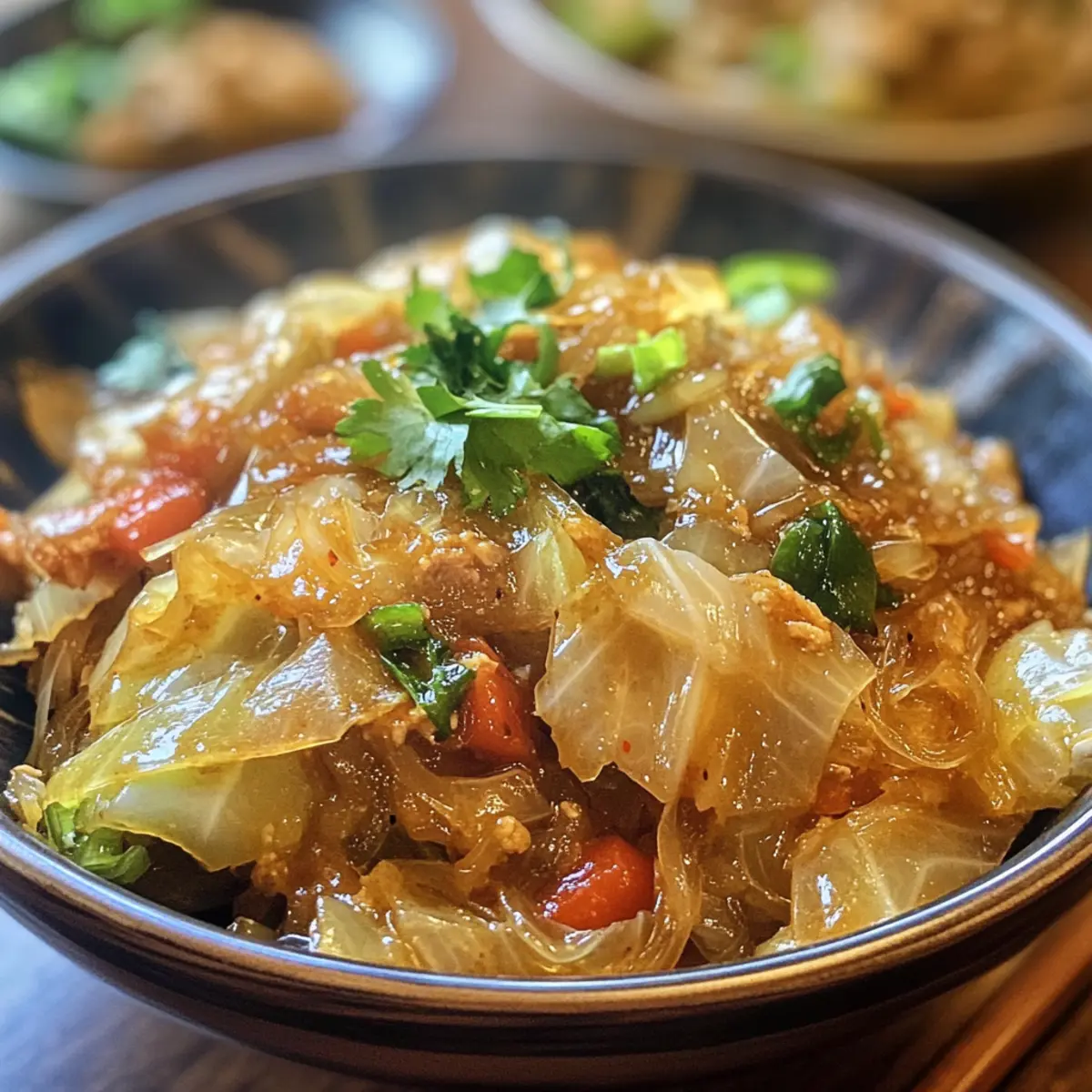
What to Serve with Vegan Chinese Napa Cabbage with Glass Noodles
Elevate your meal with delightful pairings that complement this hearty dish, creating a vibrant and satisfying dining experience.
-
Steamed Jasmine Rice: The fluffy, fragrant rice acts as a perfect canvas to soak up the savory sauce from the noodles. It’s a classic choice that never disappoints.
-
Crispy Tofu Bites: These golden nuggets provide a crunchy texture contrast while adding protein—perfect for those who want an extra boost of heartiness.
-
Garlic Green Beans: Sautéed with garlic and a hint of soy sauce, these vibrant green beans add a fresh, crisp element that complements the softness of the noodles.
-
Spicy Szechuan Eggplant: For the adventurous eaters, the spicy, savory profile of eggplant adds another layer of flavor and a satisfying bite, enhancing your meal’s overall experience.
-
Sesame Cucumber Salad: Chilled and refreshing, this salad brings a delightful crunch and vibrant color, perfectly balancing the warm, comforting flavors of the glass noodles.
-
Chrysanthemum Tea: This floral herbal tea is light and aromatic—offering a soothing finish to round out your meal and cleanse your palate beautifully.
Expert Tips for Napa Cabbage Glass Noodles
-
Noodle Soaking: Use hot water for a quick soak to achieve that perfect al dente texture. Over-soaking may lead to mushy noodles, so set a timer!
-
Ingredient Quality: Invest in high-quality soy sauce and Chee Hou Sauce; they significantly enhance the savory flavor profile. Don’t skimp on these!
-
Sichuan Infusion: Infuse your oil with Sichuan peppercorns for just enough time to impart flavor without burning them. Overcooking can lead to bitterness.
-
Cabbage Control: Use tongs to stir and toss the napa cabbage gently. This provides better control and helps avoid overflow while cooking.
-
Thickening Sauce: If your dish seems sauce-heavy, increase the heat to medium-high and stir frequently. This helps achieve the desired thick consistency without losing flavor.
-
Personal Touches: Don’t hesitate to experiment! Add your favorite vegetables or adjust the sugar to customize the flavor of your Napa Cabbage Glass Noodles.
Napa Cabbage Glass Noodle Variations
Feel free to get creative with this warm and comforting dish, tailoring it to your taste!
-
Vegan Option: Substitute oyster sauce with Chee Hou Sauce for a completely plant-based flavor boost. This swap keeps the dish deliciously rich without any animal products.
-
Mushroom Medley: Add shiitake or oyster mushrooms for added umami and texture. Their earthy flavor will beautifully complement the napa cabbage.
-
Garlic Scapes: Toss in chopped garlic scapes for a subtle onion-y sweetness. These tender delights can elevate the dish and add a hint of spring.
-
Spicy Kick: Increase Sichuan peppercorns or add a touch of chili oil to spice things up. Adjust to your taste for that exhilarating heat!
-
Crunchy Greens: Stir in a handful of snow peas or bok choy towards the end for a burst of color and crunchy texture. They’ll add freshness and a satisfying bite.
-
Wrap it Up: Use the mix as a filling for lettuce wraps. This fresh twist transforms it into a fun finger food, perfect for casual family dinners!
-
Noodle Swap: Swap glass noodles for whole wheat noodles or rice noodles if you prefer. Each choice brings a new texture to the recipe.
-
Savory Broth: For a soupy version, add vegetable broth while sautéing the cabbage. It creates a warm bowl that’s perfect for chilly evenings, like a comforting hug in a bowl.
These variations highlight the adaptability of the recipe, allowing you to create your perfect dish while feeding the soul, much like my beloved Napa Cabbage Tofu combo! Enjoy exploring these options as you craft your comforting meal.
How to Store and Freeze Napa Cabbage Glass Noodles
-
Fridge: Store any leftovers in an airtight container for up to 3 days. This dish is best enjoyed fresh, but you can enjoy it reheated for a quick meal.
-
Freezer: If you want to freeze your Napa Cabbage Glass Noodles, place them in a freezer-safe container or bag, ensuring to remove excess air. They’ll stay fresh for up to 1 month.
-
Reheating: To reheat, gently warm in a skillet over low heat, adding a splash of water if needed to restore moisture. Stir occasionally until heated through for optimal texture.
-
Avoid Freezing Raw Ingredients: It’s best to cook the dish before freezing, as raw napa cabbage may become soggy when defrosted.
Make Ahead Options
These Vegan Chinese Napa Cabbage with Glass Noodles are perfect for busy home cooks looking to save time during hectic weekdays! You can chop the napa cabbage and soak the potato noodles up to 24 hours in advance. Just store the cabbage in an airtight container in the refrigerator to maintain its crispness and prevent wilting. When you’re ready to cook, simply mix the sauce and sauté the aromatics, then add the prepped cabbage and noodles, cooking until everything is perfectly combined. This way, you’ll have a comforting meal on the table in no time, all while keeping its delightful flavors just as vibrant and satisfying!
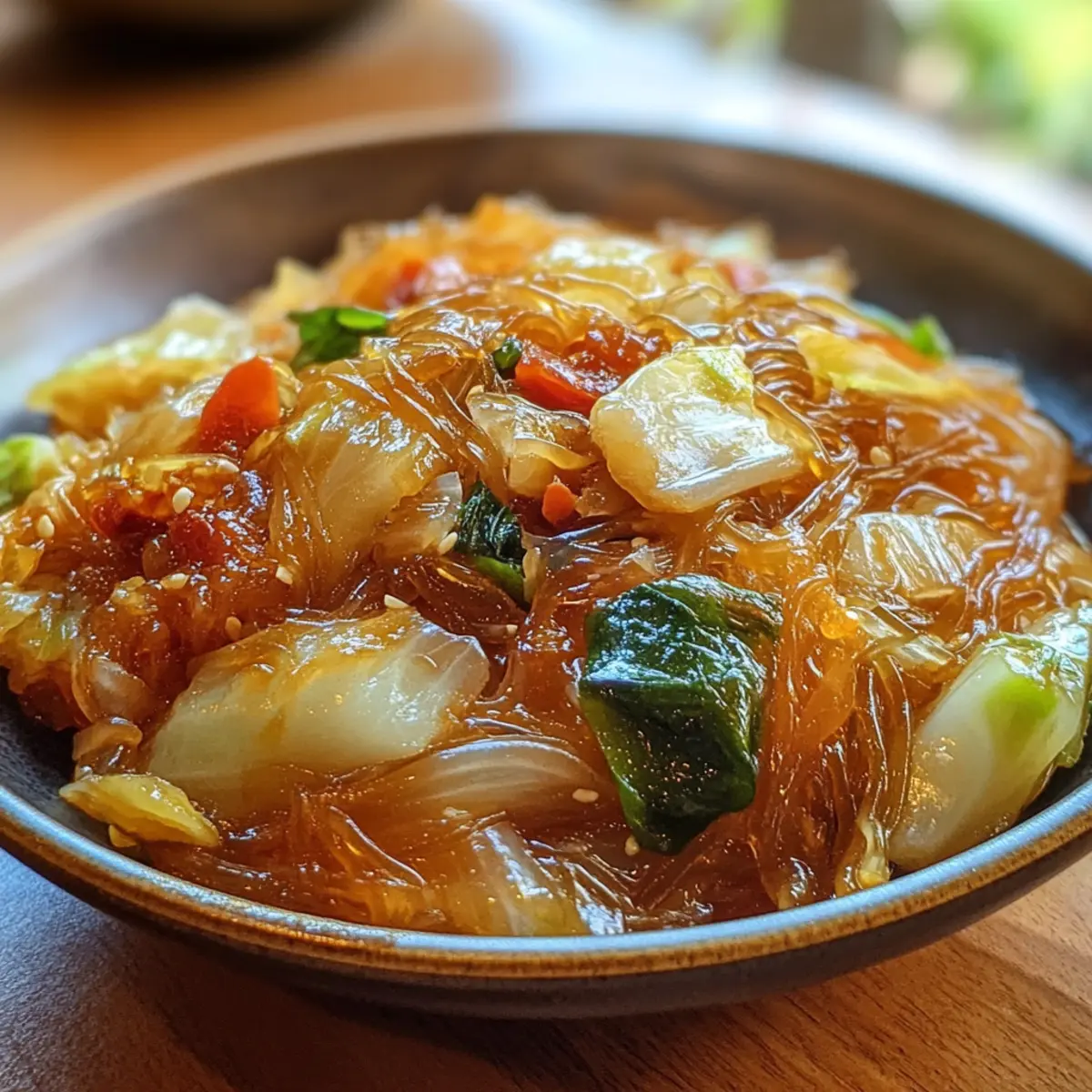
Napa Cabbage Glass Noodles Recipe FAQs
How do I choose ripe napa cabbage?
Absolutely! Look for napa cabbage with crisp, vibrant green leaves and a firm, dense head. Avoid any heads with wilted leaves or dark spots, as these can indicate spoilage. The fresher the cabbage, the better texture and flavor it will impart to your dish.
How long can I store leftovers of Napa Cabbage Glass Noodles?
You can store your leftovers in an airtight container in the refrigerator for up to 3 days. Be sure to let them cool before storing to prevent condensation. When ready to enjoy, gently reheat in a skillet over low heat, adding a splash of water if necessary to restore moisture.
Can I freeze Napa Cabbage Glass Noodles?
Yes, you can! To freeze, place the dish in a freezer-safe container or a heavy-duty freezer bag, ensuring to remove excess air. It will keep well in the freezer for up to 1 month. When you’re ready to enjoy, thaw it in the refrigerator overnight and reheat gently in a skillet, adding a little water if needed.
What if my dish seems too liquidy after cooking?
Very! If your Napa Cabbage Glass Noodles appear too liquidy, increase the heat to medium-high and cook uncovered for an additional 1-2 minutes, stirring frequently. This will help evaporate excess moisture and thicken the sauce, creating that deliciously cohesive texture you’re after.
Is this dish suitable for people with allergies?
Absolutely! This recipe can easily accommodate various dietary restrictions. For those with soy allergies, consider using coconut aminos as a soy sauce substitute. Additionally, if you’re concerned about gluten, opt for gluten-free soy or tamari sauces. Always check individual ingredient labels for allergens to ensure it’s safe for your needs.
How can I make this dish spicier?
If you love a kick of heat, you can increase the amount of Sichuan peppercorns to taste, or add a dash of chili oil or red pepper flakes to the sauce mix before cooking. Just remember, start with a small amount and adjust to your preference for a delightful spicy experience!
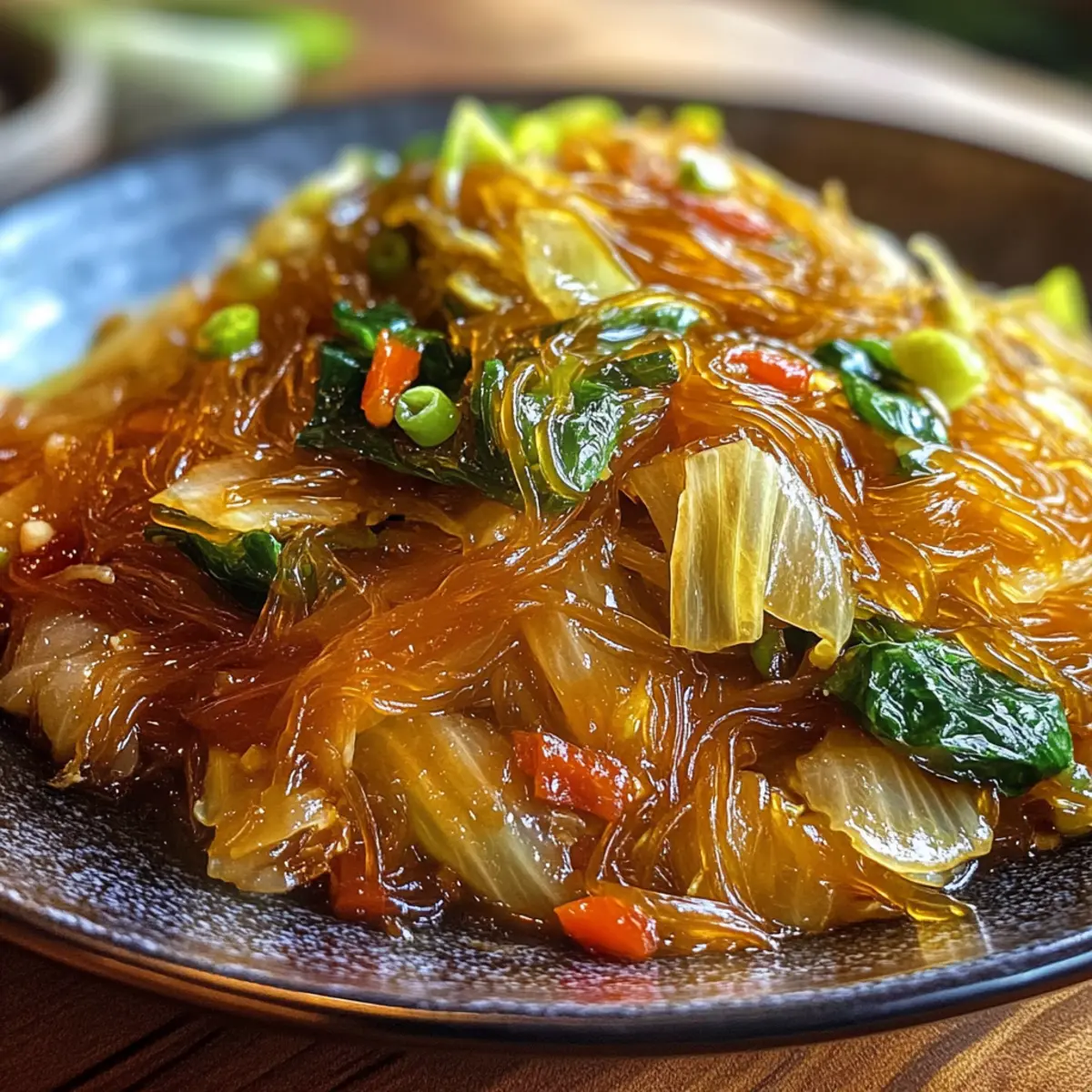
Hearty Napa Cabbage Glass Noodle Delight for Cozy Meals
Ingredients
Equipment
Method
- Begin by soaking the potato noodles in hot water for about 10 minutes until al dente. Drain and rinse under cold water to stop cooking.
- Chop the napa cabbage into quarters and then into bite-sized pieces for uniform cooking.
- In a mixing bowl, combine soy sauce, dark soy sauce, oyster sauce (or Chee Hou Sauce), and sugar. Whisk until sugar dissolves.
- In a large skillet, heat peanut oil and infuse with Sichuan peppercorns for 30 seconds. Remove peppercorns after infusion.
- Add chopped green onions and minced ginger to the skillet, stir-fry for 30 seconds until fragrant.
- Add napa cabbage pieces to the skillet, stir frequently for about 5 minutes until wilted.
- Pour the mixing sauce over the cabbage, add soaked potato noodles, and stir to coat well. Cover and cook for 2-3 minutes.
- If the mixture is too liquidy, increase heat and cook for an additional 1-2 minutes to thicken the sauce.
- Transfer to a serving plate and enjoy hot.
Leave a Reply