
As the vibrant colors of Singapore noodles swirl together on my plate, I can almost hear the bustling streets of a night market, alive with the aromas of sizzling woks and laughter. These Quick and Flavorful Singapore Noodles are a delightful escape into Asian cuisine, designed for those of us who crave an easy weeknight dinner without sacrificing taste. In just 35 minutes, you can whip up this delicious dish, combining tender rice vermicelli, colorful vegetables, and protein-packed chicken and shrimp, all enveloped in aromatic spices. It’s not just quick; it’s a meal that dances on your palate, offering both comfort and excitement. Ready to transform your dinner routine?
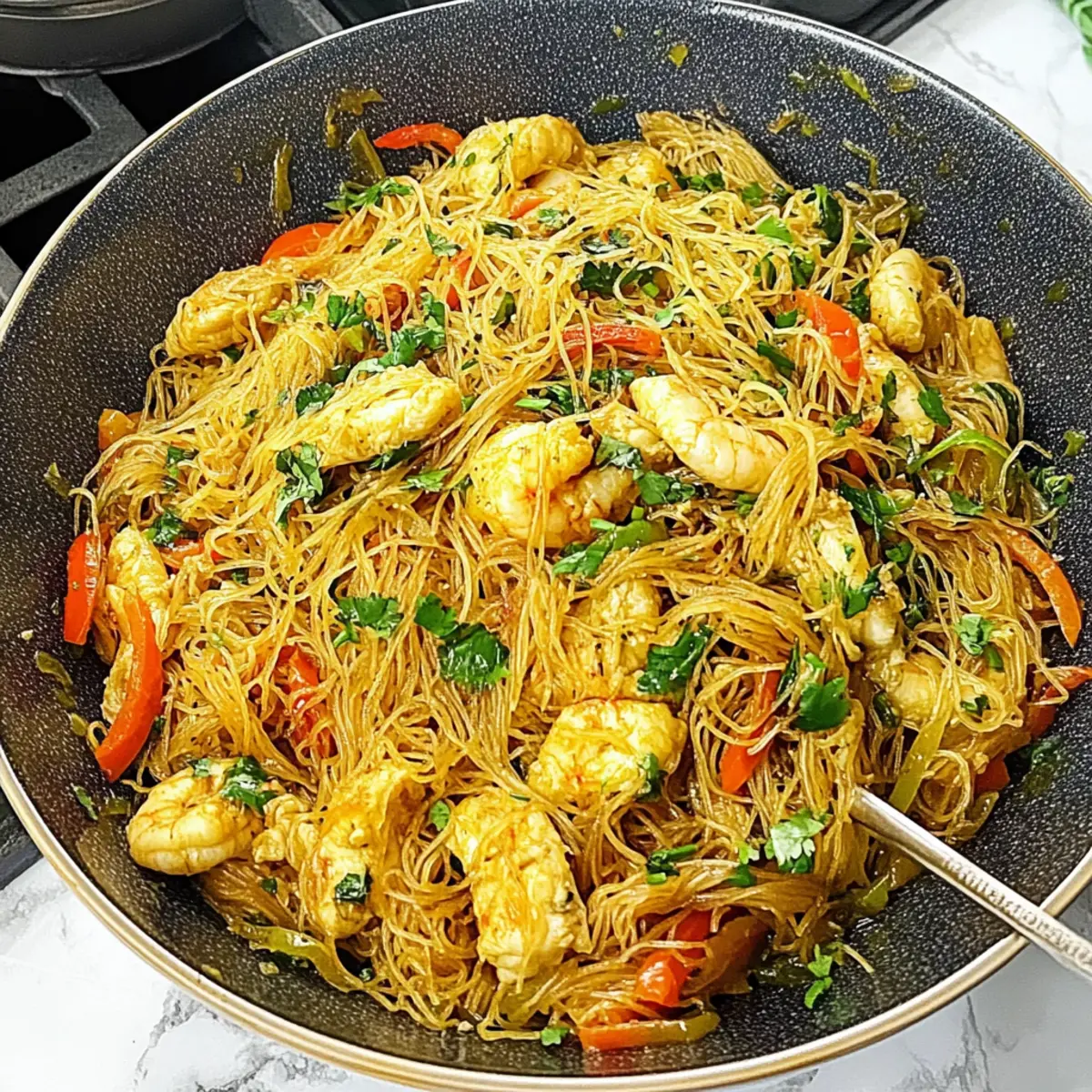
Why Are Singapore Noodles So Special?
Quick and Easy: This recipe comes together in just 35 minutes, making it perfect for those busy weeknights when you’re scratching your head for meal ideas.
Flavor Explosion: Packed with a dynamic mix of aromatic spices like curry powder and fresh ginger, each bite delivers an exciting burst of flavor.
Versatile Ingredients: Swap in your favorite proteins or seasonal veggies to create a dish that fits your unique tastes. For more inspiration, check out our guide on easy ingredient substitutions.
Satisfying and Nourishing: With a balance of protein and carbohydrates, these noodles provide comfort while fueling your day.
Crowd-Pleaser: Whether cooking for the family or hosting friends, this dish will impress everyone at the table, making it ideal for social gatherings.
Indulge in a vibrant dining experience without the hassle, and enjoy noodles that invite you to savor every delicious moment!
Singapore Noodles Ingredients
• Get ready to gather everything you need for a vibrant culinary adventure!
For the Noodles
- Rice Vermicelli Noodles – The foundation of your dish; soak just until tender to avoid mushiness.
For the Protein
- Boneless Skinless Chicken Breast – Provides lean protein; feel free to substitute with tofu for a vegetarian twist.
- Large Shrimp – Adds a succulent seafood flavor; can be omitted for a vegan option.
- Eggs (beaten) – They enrich the dish with a creamy texture; use tofu scramble instead for a plant-based version.
For the Vegetables
- Onion (thinly sliced) – Adds sweetness and body; both red or yellow varieties will work beautifully.
- Red Bell Pepper (thinly sliced) – Brings color and subtle sweetness; substitute with green bell pepper if preferred.
- Carrots (julienned) – Gives crunch and nutritional value; zucchini is a great alternative.
For the Flavors
- Garlic (minced) – Essential for an aromatic base; don’t skip this one!
- Fresh Ginger (minced) – Infuses warmth and a slight kick; ground ginger is a quick substitute if needed.
- Curry Powder – The secret to your dish’s distinctive flavor; adjust according to your spice level preference.
- Soy Sauce – Adds a savory umami depth; tamari works well for gluten-free needs.
- Oyster Sauce – Offers depth and a touch of sweetness; use mushroom sauce for a vegetarian option.
- Rice Vinegar – Adds a tangy brightness; apple cider vinegar can work in a pinch.
- Sugar – Balances all the savory notes; honey or agave can be used for a different flavor profile.
For Garnishing
- Green Onions (sliced) – Enhances flavor and presentation; chives are a good alternative.
- Fresh Cilantro (chopped) – A fresh finishing touch; feel free to omit if it’s not to your taste.
- Lime Wedges – For serving; they elevate the dish’s freshness and are highly recommended!
Gather these ingredients, and you’ll be well on your way to creating delightful Singapore noodles that bring a taste of adventure right to your table!
Step‑by‑Step Instructions for Singapore Noodles
Step 1: Soak the Noodles
Begin by soaking 8 ounces of rice vermicelli noodles in a large bowl of hot water for about 5 minutes, or until they are tender yet firm. Drain the noodles carefully and set them aside. This crucial step ensures your Singapore Noodles have the perfect texture, so avoid over-soaking them to prevent mushiness.
Step 2: Prepare the Sauce
In a small mixing bowl, whisk together 3 tablespoons of soy sauce, 2 tablespoons of oyster sauce, 1 tablespoon of rice vinegar, and 1 teaspoon of sugar until well combined. Set this flavorful sauce aside, as it will enhance the depth of flavor in your Singapore Noodles, creating a deliciously savory finish.
Step 3: Cook the Chicken
Heat 1 tablespoon of vegetable oil in a large skillet or wok over medium-high heat. Once the oil is shimmering, add the thinly sliced chicken. Sauté the chicken for about 3-4 minutes, or until it’s no longer pink and nearly cooked through. Remove the chicken from the skillet and set it aside, allowing the residual heat to keep it warm.
Step 4: Add the Shrimp
In the same skillet, add the peeled and deveined shrimp to the remaining oil. Cook the shrimp for 2-3 minutes, tossing occasionally, until they turn pink and opaque. Once cooked, remove the shrimp alongside the chicken, ensuring both proteins stay moist while you prepare the vegetables.
Step 5: Sauté Aromatics
With the skillet still over medium heat, add the remaining tablespoon of oil, along with minced garlic and ginger. Sauté the mixture for about 30 seconds, stirring constantly until fragrant. This step unlocks the rich flavors that will serve as the backbone of your Singapore Noodles.
Step 6: Cook the Vegetables
Add the thinly sliced onion, red bell pepper, and julienned carrots to the skillet. Stir-fry the vegetables for approximately 5 minutes, or until they become tender-crisp and vibrant. This method preserves their color and texture, contributing to the overall appeal of your dish.
Step 7: Scramble the Eggs
Push the sautéed vegetables to one side of the skillet and pour in the beaten eggs into the empty space. Allow the eggs to cook for about 1-2 minutes until they are fully scrambled, then mix them into the vegetables. This addition enriches the Singapore Noodles with a creamy texture that balances the dish beautifully.
Step 8: Combine Noodles and Proteins
Next, add the drained rice vermicelli noodles, cooked chicken, and shrimp back into the skillet. Sprinkle the entire mixture with curry powder, and toss everything gently to combine well. Ensure the noodles are heated through and coated with the spices, creating a harmonious blend of flavors.
Step 9: Add the Sauce
Pour your prepared sauce over the noodle mixture, tossing everything to evenly coat all ingredients. Continue to cook for an additional 1-2 minutes, allowing the flavors to meld and ensure everything is warmed through. This step is crucial for achieving the perfect balance of tastes in your Singapore Noodles.
Step 10: Garnish and Serve
To finish, stir in sliced green onions and remove the skillet from heat. Serve your Singapore Noodles warm, garnished with freshly chopped cilantro and lime wedges on the side. This vibrant presentation not only enhances the visual appeal but also adds a refreshing touch to your delightful meal.
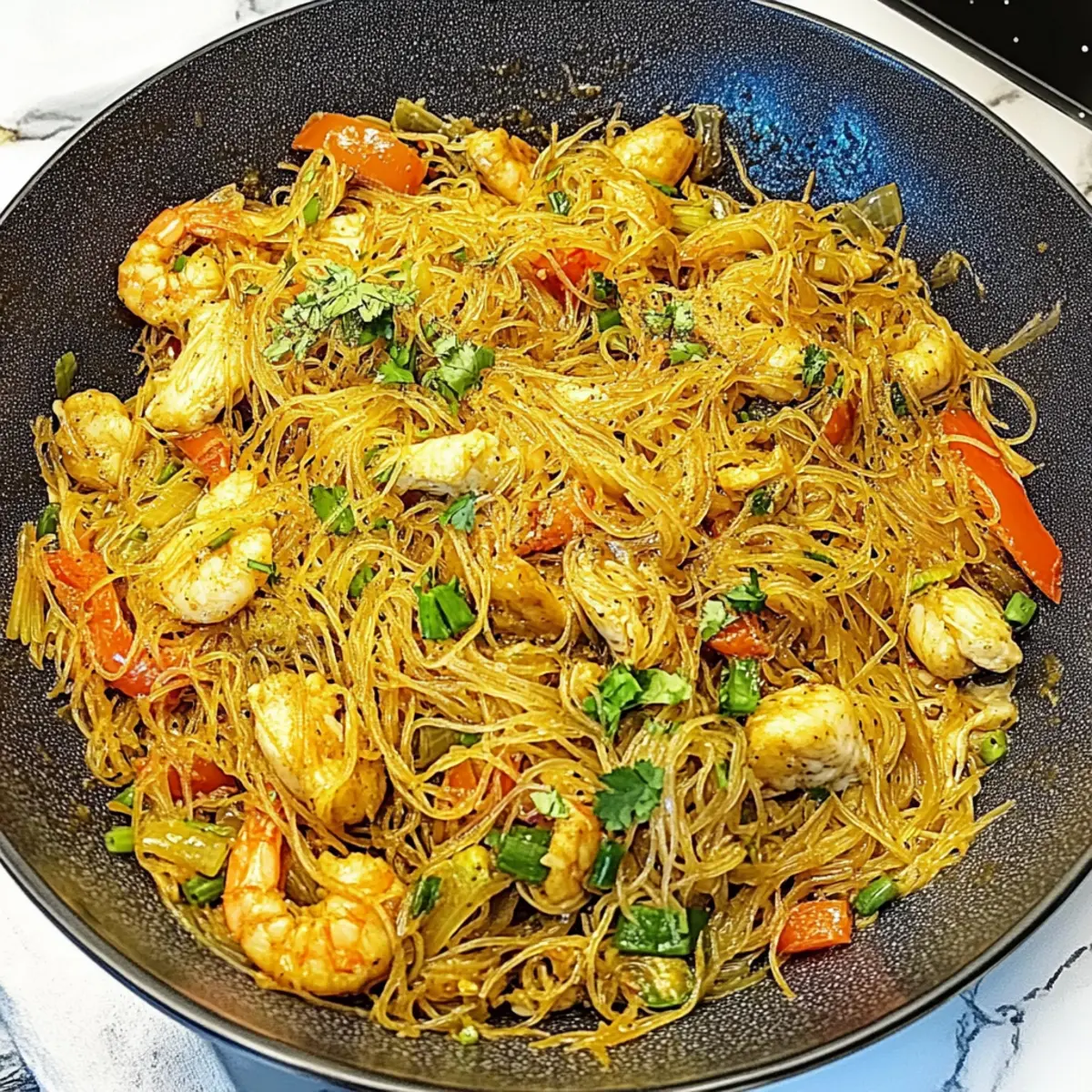
What to Serve with Quick and Flavorful Singapore Noodles
Elevate your dinner experience by pairing complementary dishes that enhance the vibrant flavors of your Singapore Noodles.
-
Creamy Coconut Soup: This rich, velvety soup adds warmth and a tropical twist, making for a delightful appetizer or side dish. Its creamy texture beautifully contrasts the noodles’ vibrant crunch.
-
Spring Rolls: These fresh, crispy rolls packed with crunchy vegetables and a tangy dipping sauce offer a refreshing bite. They bring a delightful texture and a little crunch, enhancing your meal’s playfulness.
-
Stir-Fried Bok Choy: Lightly sautéed with garlic, this leafy green vegetable adds a crisp bite and earthy flavor, balancing the noodles’ richness. It’s a nutritious side that’s quick to prepare.
-
Sesame Green Beans: Tossed in a savory sesame dressing, these green beans add a nutty flavor and crunch that complements the Singapore Noodles wonderfully.
-
Dumplings: Serving a platter of potstickers or steamed dumplings adds a hearty touch to your meal. Choose pork or vegetable fillings for an extra layer of flavor.
-
Asian-Inspired Salad: A refreshing salad with mixed greens, sesame dressing, and crunchy toppings provides a light contrast to the noodles. It keeps your palate refreshed and adds brightness to the meal.
-
Chilled Sake: Pair your dish with a glass of chilled sake to enhance the meal with its smooth, subtle flavors that align beautifully with Asian-inspired dishes.
Indulge in a flavorful meal that dances across your palate and transports you straight to the bustling streets of Singapore!
Expert Tips for Singapore Noodles
-
Noodle Consistency: Always soak rice vermicelli noodles until they’re just tender, as over-soaking can result in mushy noodles that break apart easily.
-
Protein Timing: Remove chicken and shrimp from heat just before they’re fully cooked to prevent overcooking while combining with other ingredients.
-
Fluffy Eggs: For fluffier eggs, scramble them separately before adding to the noodles instead of cooking them in the same pan all at once.
-
Flavor Boost: Adjust your curry powder to suit your taste; if you’re unsure, start with less and add gradually for optimal flavor in your Singapore Noodles.
-
Reheat Moisture: When storing leftovers, add a splash of water or broth when reheating to keep the noodles from drying out—nobody likes dry noodles!
Make Ahead Options
These Singapore Noodles are perfect for meal prep enthusiasts! You can soak the rice vermicelli noodles and prepare the sauce up to 24 hours in advance; simply refrigerate the noodles in an airtight container to maintain their texture and prevent them from sticking together. Additionally, you can chop vegetables and pre-cook proteins like chicken and shrimp; store these in separate containers for up to 3 days. When you’re ready to cook, just sauté the aromatics, toss in the prepped ingredients, and follow the final steps to heat everything through. With these make-ahead tips, you’ll enjoy restaurant-quality Singapore Noodles with minimal effort on busy weeknights!
How to Store and Freeze Singapore Noodles
Fridge: Store leftover Singapore Noodles in an airtight container in the fridge for up to 3-4 days to maintain freshness and flavor.
Freezer: If you want to freeze Singapore Noodles, place them in a freezer-safe container or bag, leaving some space for expansion. They can be frozen for up to 2 months.
Reheating: When ready to enjoy, thaw in the fridge overnight, then reheat in a skillet with a splash of water or broth to keep them moist and prevent drying out.
Avoid Sogginess: To maintain the integrity of the noodles, only store them after they have completely cooled down to prevent extra moisture buildup.
Singapore Noodles Variations & Substitutions
Feel free to sprinkle your creative flair over this dish, allowing the flavors and textures to shine in your own unique way!
-
Vegetarian Option: Replace chicken and shrimp with tofu or tempeh for a hearty meatless meal. This twist offers a satisfying protein source while keeping the dish delightful.
-
Extra Crunch: Add water chestnuts or snow peas for a delightful crunch and fresh flavor. These ingredients infuse the dish with a satisfying bite that contrasts beautifully with the soft noodles.
-
Spice It Up: Incorporate chili flakes or a little sriracha to your sauce for an added kick! Heat lovers will appreciate the extra warmth that wakes up the palate.
-
Grains Swap: Switch up the carbs by using quinoa or whole wheat noodles. These alternatives provide a different texture and an added nutritional punch, keeping your meal both healthy and delicious.
-
Sweetness Boost: Experiment with pineapple chunks or a hint of brown sugar in the sauce for a sweet twist. This will create a beautiful balance against the savory flavors, reminiscent of tropical regions.
-
Coconut Flavor: Use coconut milk instead of part of the sauce for a creamy, luscious mouthfeel that will transport you to paradise! Just remember to adjust the seasoning to maintain balance.
-
Fresh Herb Swap: Rather than cilantro, use basil or mint for a fresh herbal touch that lends an intriguing twist to the flavors. These herbs can lift the dish to new heights of freshness.
-
Seasonal Veggies: Embrace the seasons by adding whatever colorful vegetables are in peak, like zucchini, asparagus, or even butternut squash. This keeps your dish vibrant and versatile, bringing new life into every bite.
Whichever variation you choose, each offers a delightful spin on this classic dish! And remember, if you’re looking for more ways to personalize your meals, don’t miss our helpful suggestions for easy ingredient substitutions. Enjoy crafting your perfect plate!
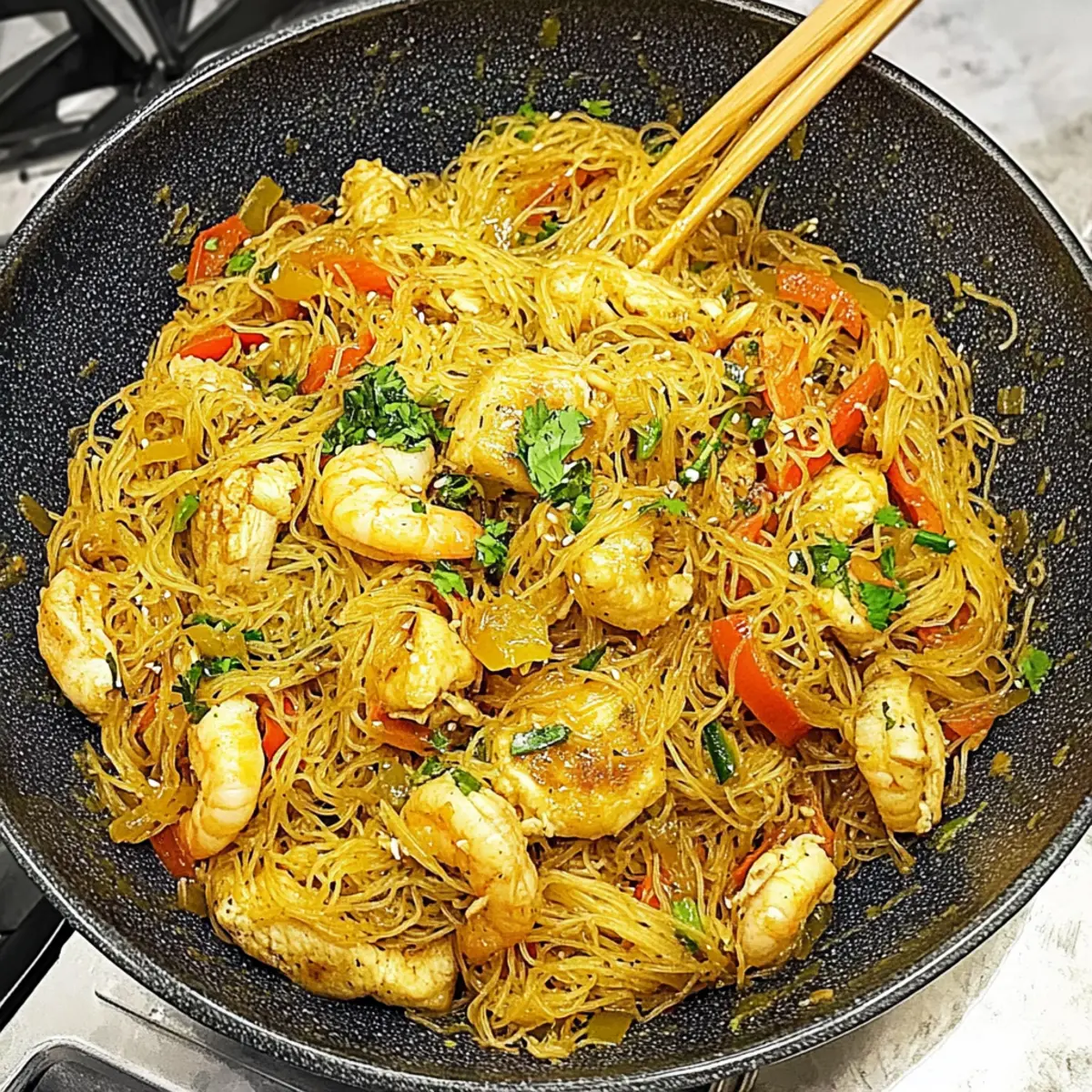
Singapore Noodles Recipe FAQs
What type of rice vermicelli noodles should I use for Singapore Noodles?
Absolutely! Look for thin rice vermicelli noodles, which are often labeled as “bean thread” or “rice noodles.” When selecting, check that they are gluten-free and ideally from a reliable brand. Soak them in hot water just until tender, typically about 5 minutes, to avoid a mushy texture.
How long can I store leftover Singapore Noodles?
You can store your delicious Singapore Noodles in an airtight container in the fridge for up to 3-4 days. To keep them fresh, ensure they are cooled completely before placing them in the container. When ready for a tasty leftover meal, reheat gently in a skillet with a splash of oil or broth to restore moisture.
Can I freeze Singapore Noodles?
Yes, freezing is a great option if you have leftovers! Place your Singapore Noodles in a freezer-safe container or resealable bag, leaving some space for expansion. They can be happily frozen for up to 2 months. When it’s time to enjoy them, thaw in the fridge overnight, and reheat in a skillet with a little water or broth to prevent the noodles from drying out.
What should I do if my Singapore Noodles turn out mushy?
If your noodles are mushy, it may be due to over-soaking or cooking. For next time, soak the rice vermicelli just until they’re tender (about 5 minutes). If you find yourself facing mushy noodles, try tossing them in a hot pan with a little oil to help absorb some moisture while stirring gently. This might help improve the texture and take away some of the sogginess.
Are there any dietary considerations for Singapore Noodles?
Definitely! This recipe can be easily adapted for various dietary needs. For a vegetarian option, substitute chicken and shrimp with tofu or more veggies. If you’re avoiding gluten, use tamari instead of soy sauce and ensure your noodles are gluten-free. Just remember, if you’re serving this dish to pets, avoid any ingredients that might be harmful to them.
Can I adjust the spiciness of my Singapore Noodles?
Very! If you prefer a spicier kick, consider adding red pepper flakes or a dash of chili sauce when cooking. Alternatively, you might select a spicier curry powder for a robust flavor. Always taste as you go; you can gradually add more spices to reach your desired level of heat!
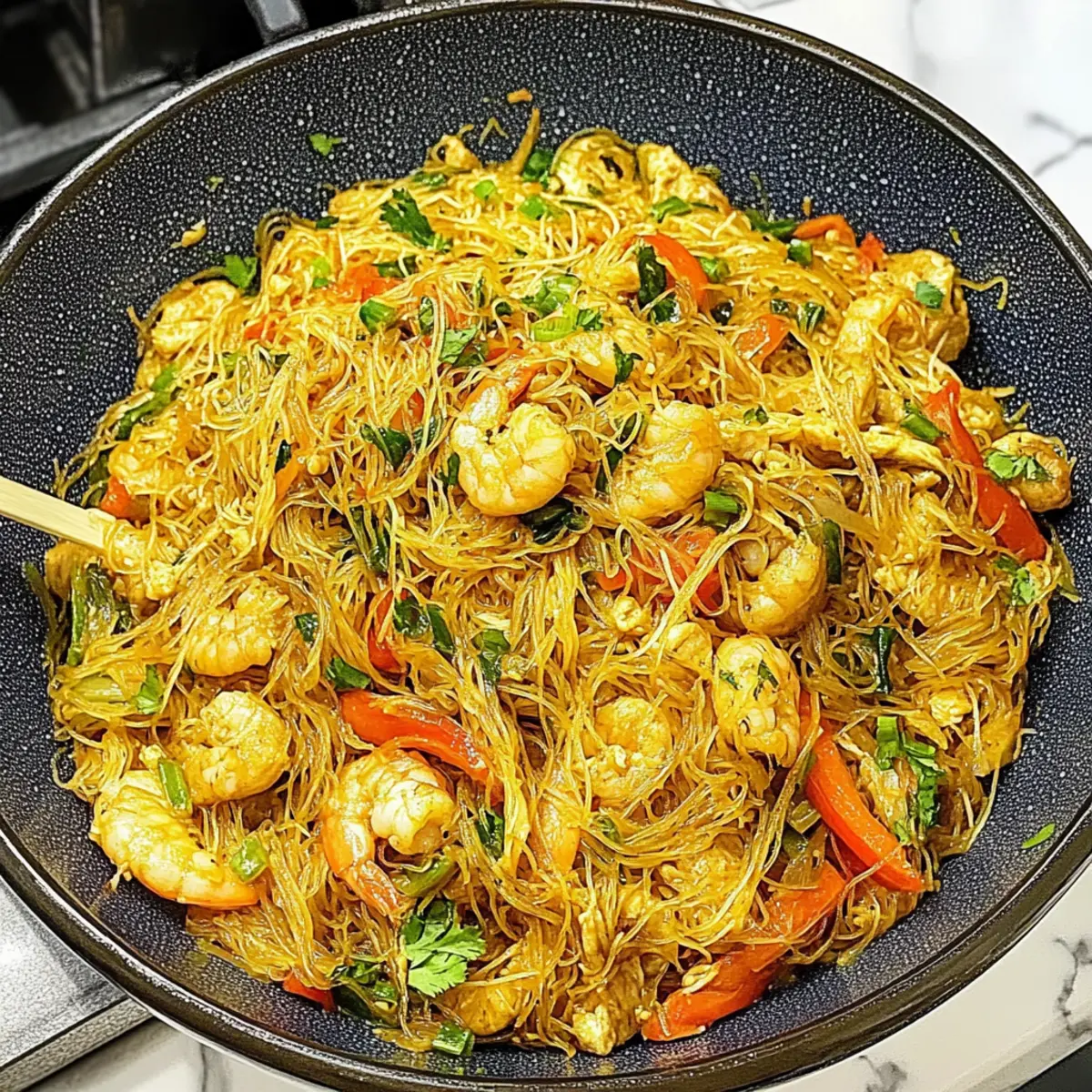
Delicious Singapore Noodles Ready in 35 Minutes or Less
Ingredients
Equipment
Method
- Soak the rice vermicelli noodles in hot water for about 5 minutes, then drain and set aside.
- Whisk together soy sauce, oyster sauce, rice vinegar, and sugar in a bowl to prepare the sauce.
- Heat oil in a skillet, sauté the chicken until cooked through, then set aside.
- Add shrimp to the skillet, cooking until pink and opaque, then set aside with the chicken.
- Sauté garlic and ginger in the same skillet until fragrant.
- Add onion, bell pepper, and carrots, stir-frying for about 5 minutes.
- Push veggies aside, scramble eggs in the skillet, then mix in with the vegetables.
- Combine noodles, chicken, and shrimp, adding curry powder and tossing to combine.
- Pour the sauce over the noodle mixture, cooking for 1-2 more minutes.
- Stir in green onions, serve garnished with cilantro and lime wedges.
Leave a Reply