
The aroma of simmering beef brisket wafted through my kitchen, transporting me straight to a bustling Seoul market on a chilly winter’s day. As cozy as a cherished memory, this Korean Winter Soup offers a hearty embrace with every warming spoonful. Bursting with tender beef, vibrant vegetables, and the rich umami of gochujang, it’s the perfect antidote to those winter blues. What makes this recipe even better is how quick it comes together for a comforting meal that’ll make everyone feel at home. Imagine sharing this flavorful dish with loved ones, as laughter and stories fill the air, making it the ultimate comfort food during the cold months. Are you ready to dive into this delicious Korean culinary adventure?
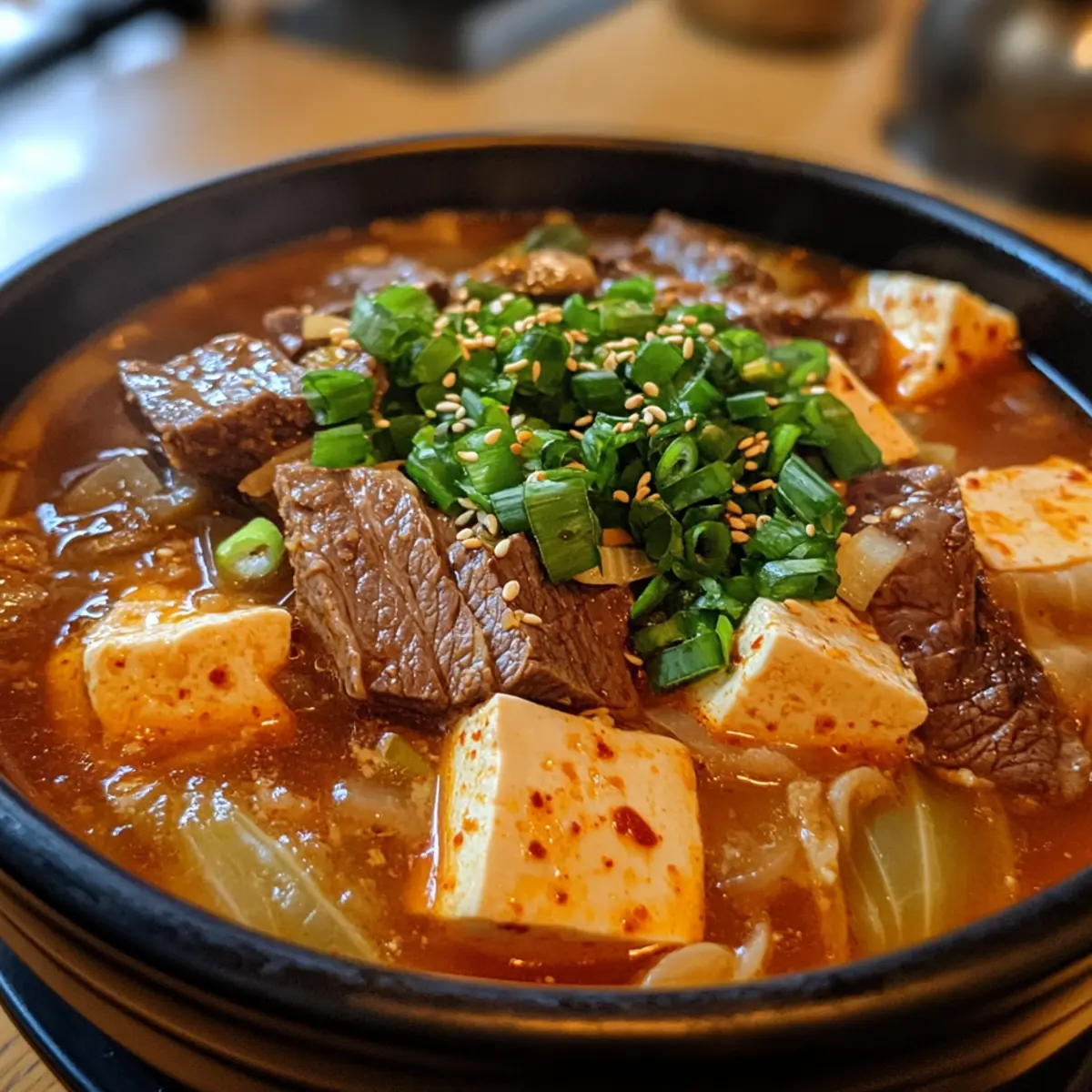
Why Is This Soup So Special?
Hearty Comfort: Every bowl of this Korean Winter Soup is a warm hug, packed with tender beef brisket and fresh vegetables that provide hearty satisfaction.
Quick Preparation: You’ll love how easily it comes together; in under an hour, you can have a nourishing meal on the table.
Bold, Flavorful Experience: With the delightful combination of gochujang and gochugaru, each spoonful transports you to the bustling flavors of Korean cuisine.
Versatile Options: Feel free to mix it up! Swap in your favorite veggies or try different cuts of beef for a unique twist, just like in our Cabbage Tofu Soup.
Crowd-Pleaser: Perfect for gatherings, this soup brings people together, making it a memorable addition to any winter meal.
Nutrient-Packed: Boost the health factor by adding leafy greens or mushrooms during cooking, similar to how you can enrich any dish with elements from our White Bean Soup.
Korean Winter Soup Ingredients
For the Broth
• Beef Brisket – Provides robust, beefy essence—can be substituted with chuck roast or short ribs for variations in flavor and tenderness.
• Water – Acts as the base of the broth—essential for simmering ingredients.
• Soy Sauce – Adds salty umami depth to balance the sweetness of vegetables.
• Gochujang (Korean red pepper paste) – Offers a spicy-sweet kick; can substitute with miso paste mixed with chili powder for a different flavor profile.
• Gochugaru (Korean red pepper powder) – Adds smoky heat; substitute with crushed red pepper flakes if needed.
• Garlic – Infuses aromatic savoriness into the broth—using fresh is best for optimal flavor.
• Onion – Contributes sweetness and body to the broth as it caramelizes.
For the Vegetables
• Napa Cabbage – Adds a mild, refreshing crunch and soaks up all those delightful flavors.
• Tofu (firm, cubed) – Provides a protein-rich component that contrasts beautifully with the beef; absorbs spices well.
• Daikon Radish – Lends sweetness and delicate texture to the soup.
• Green Onions (sliced) – Used for garnish and fragrant sautéing; adds a pop of freshness.
Seasoning & Accompaniments
• Sesame Oil – Enhances nutty aroma; heat in a small pan to bring out its fragrance.
• Salt and Pepper – Essential for balancing overall flavors—adjust to your personal taste.
• Cooked White Rice – Serves as a hearty accompaniment, soaking up the delicious broth beautifully.
Feel the warmth and satisfaction with each bowl of this comforting Korean Winter Soup that truly embodies the essence of hearty meals!
Step‑by‑Step Instructions for Korean Winter Soup
Step 1: Prepare the Broth
In a large pot, add the beef brisket along with enough water to fully submerge it, approximately 6-8 cups. Bring the mixture to a rolling boil over medium-high heat, then reduce the heat to low and let it simmer gently for 30 minutes. This initial simmering process will tenderize the beef and create a rich base for your Korean Winter Soup.
Step 2: Skim the Surface
Once the broth has simmered for 30 minutes, use a fine-mesh skimmer to remove any impurities and foam that may have risen to the surface. Skimming is essential for achieving a clear and flavorful soup. After skimming, take a moment to enjoy the aroma that already fills your kitchen, hinting at the comforting meal ahead.
Step 3: Add the Seasonings
Stir in the soy sauce, gochujang, gochugaru, and minced garlic into the simmering broth. Mix well until the chili paste is fully dissolved, infusing the broth with its spicy-sweet flavor. Continue to simmer the soup for another 10 minutes, allowing the seasonings to meld beautifully with the beef and create a tantalizing aroma.
Step 4: Incorporate the Vegetables
Now, add the chopped onion, napa cabbage, cubed tofu, and sliced daikon radish to the pot. Stir gently to combine all the ingredients, then cover the pot and simmer for an additional 20 minutes. This step ensures that the vegetables become tender while absorbing the delicious flavors of the Korean Winter Soup.
Step 5: Sauté the Green Onions
In a small pan, heat sesame oil over medium heat. Once hot, add the sliced green onions and sauté for about 2 minutes until fragrant and slightly caramelized. This step enhances the aroma and adds a nutty depth to the soup. Once ready, add the sautéed green onions into the pot of soup, stirring well to distribute their flavor.
Step 6: Season and Adjust
Taste the Korean Winter Soup and season with salt and pepper according to your preference. Remember that the flavors will continue to develop as it simmers, so adjust gradually. Let it simmer for an additional 5-10 minutes, keeping an eye on the tenderness of the beef and vegetables. The soup should be rich and comforting at this stage.
Step 7: Serve Warm
Ladle the hot Korean Winter Soup into bowls and serve alongside a generous scoop of cooked white rice. The rice will soak up the delicious broth, making each bite even more satisfying. Enjoy this soul-warming dish with family and friends, creating delightful moments around the dinner table.
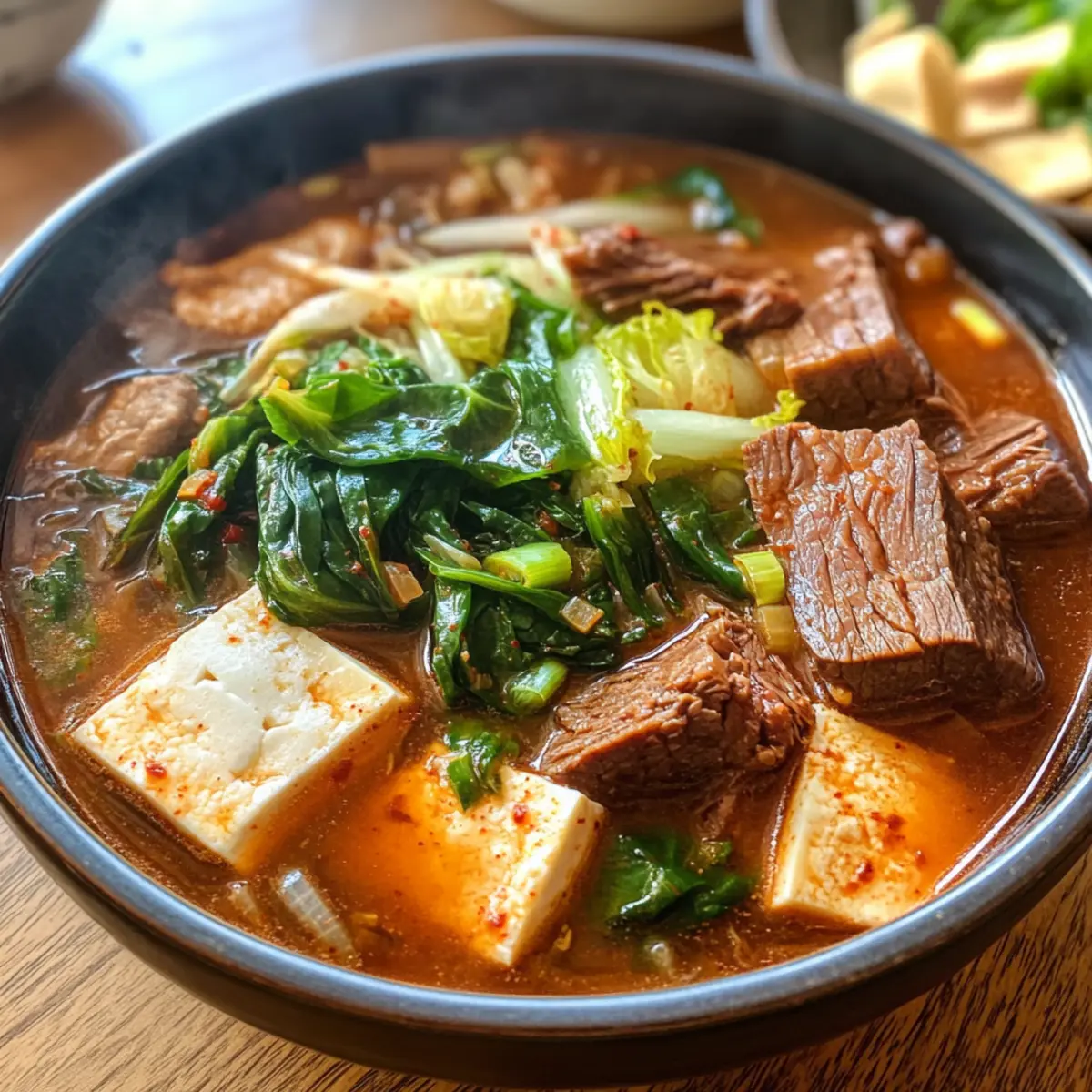
What to Serve with Korean Winter Soup
Warm your heart and elevate your dining experience with delightful sides that absolutely complement the comforting Korean Winter Soup.
-
Kimchi: The bold, spicy crunch of kimchi contrasts beautifully with the rich broth, adding a delicious zing to each bite.
-
Steamed Dumplings: Fluffy dumplings filled with savory goodness make for a perfect accompaniment, allowing you to enjoy a variety of textures.
-
Garlic Fried Rice: This flavorful, aromatic rice pairs perfectly to soak up the soup’s bold flavors, enhancing your meal with every scoop.
-
Pickled Radish: Crunchy and tangy, it balances the warmth of the soup and clears the palate between each comforting spoonful.
-
Miso Soup: A light, savory miso soup can serve as an excellent starter, preparing your taste buds for the heartiness of the Korean Winter Soup.
-
Cucumber Salad: A refreshing cucumber salad with a sweet and sour dressing adds a crisp contrast, brightening up your cozy meal.
-
Spicy Squid: If you’re feeling adventurous, spicy stir-fried squid can enhance the spice levels of your meal, making it even more exciting.
-
Sweet Potato Noodles: Tossed with sesame oil and vegetables, these noodles offer a chewy texture that pairs wonderfully with the tender elements of the soup.
-
Herbal Tea: Pair your meal with a soothing herbal tea to round out the comforting experience, enhancing warmth and relaxation with each sip.
Korean Winter Soup Variations
Feel free to play with this comforting recipe to suit your taste! The cozy flavors of this soup can easily adapt to your preferences.
-
Beef Alternatives: Try using chuck roast or short ribs instead of brisket for a different richness. Each cut brings a unique texture and flavor, adding delightful variety to your bowl.
-
Extra Vegetables: Toss in other veggies like zucchini, carrots, or mushrooms for added nutrients and flavor. These additions not only enhance the soup but also make it even heartier and visually appealing.
-
Spicy Kick: For more heat, increase the amount of gochujang and gochugaru or add sliced fresh chilies. This allows you to tailor the spice level to your family’s liking while invigorating the flavor profile.
-
Mild Version: Decrease the quantities of gochujang and gochugaru if you prefer a mellower taste. Enjoy the subtle infusion of Korean flavors without overwhelming heat, making it suitable for all ages.
-
Creamy Twist: Blend in a splash of coconut milk for a creamy texture that balances the spices beautifully. This luscious addition will make your soup comforting while adding a delightful touch to the broth!
-
Herb Flavors: Mix in fresh herbs like cilantro or parsley just before serving to brighten up the soup. These vibrant herbs will not only add freshness but also enhance the overall aroma.
-
Grain Substitutions: Swap white rice for quinoa or barley, introducing different textures and flavors to the dish. Each grain contributes to a filling experience that’ll keep you satisfied for hours.
-
Vegetarian Delight: For a meat-free version, omit the beef and substitute with an assortment of hearty mushrooms or an additional block of tofu. This not only caters to dietary preferences but also creates a deliciously rich broth.
Discover even more comforting flavors by trying these alternative recipes like our Inflammatory Chicken Soup or Tuscan Ravioli Soup!
Make Ahead Options
Preparing Korean Winter Soup ahead of time is a fantastic way to save precious moments during busy weeknights! You can make the broth (steps 1-3) up to 24 hours ahead; simply cool it completely, then refrigerate in an airtight container. The vegetables can also be chopped the day before and stored separately to prevent them from becoming soggy. When you’re ready to enjoy your soup, reheat the broth on the stove and add the prepped vegetables (steps 4-6) for that fresh, vibrant taste. This method not only streamlines dinner prep but keeps your soup just as delicious and comforting as when made fresh. Enjoy warm bowls of this hearty delight with minimal effort!
Expert Tips for Korean Winter Soup
-
Choose the Right Beef: Select high-quality beef brisket for tenderness. When cooked properly, it should easily pierce with a fork, ensuring a melt-in-your-mouth experience.
-
Layer Your Flavors: Gradually adjust your seasoning with soy sauce and gochugaru. Start small to keep the flavors balanced and avoid overpowering the soup.
-
Skim for Clarity: Use a fine-mesh skimmer to remove impurities during simmering. This keeps the broth clear and enhances the overall presentation of your Korean Winter Soup.
-
Optimize Vegetable Texture: Add vegetables like napa cabbage and daikon radish in stages; you want them tender yet still vibrant. Overcooking can lead to mushy textures.
-
Nutritional Boost: Consider adding leafy greens or mushrooms during the last few minutes of cooking for extra nutrition without sacrificing flavor.
-
Reheat with Care: If you have leftovers, gently reheat on the stove to maintain the soup’s rich flavor and ensure everything warms through perfectly.
How to Store and Freeze Korean Winter Soup
Fridge: Store leftover Korean Winter Soup in an airtight container for up to 3 days. Make sure it’s completely cooled before sealing to maintain the best flavor and texture.
Freezer: For longer storage, freeze the soup in individual portions for up to 3 months. Use freezer-safe containers or resealable bags to prevent freezer burn.
Reheating: Thaw frozen soup overnight in the fridge. Reheat gently on the stovetop, adding a splash of water or broth if it’s too thick, until heated through.
Avoiding Texture Changes: When storing, be aware that tofu can become spongy upon reheating. Consider adding fresh tofu when reheating for optimal texture.
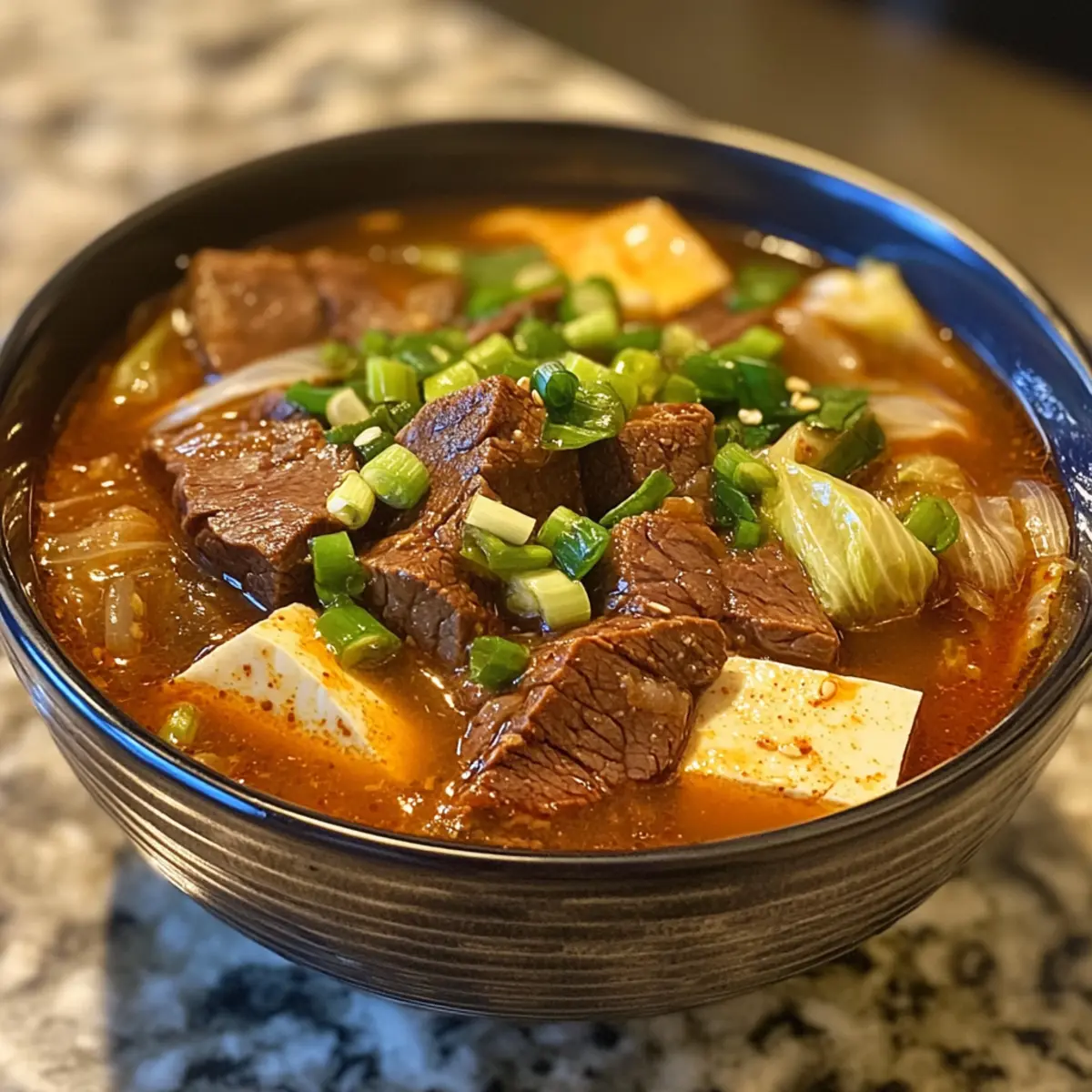
Korean Winter Soup Recipe FAQs
What type of beef should I use for this soup?
Absolutely! I recommend using high-quality beef brisket for its tenderness and flavor. However, if brisket isn’t available, consider substitutes like chuck roast or short ribs for variations in taste and texture. Just be mindful that each cut may require slight adjustments in cooking time to achieve that perfect tenderness.
How long can I store the leftovers of Korean Winter Soup?
Very! Leftover Korean Winter Soup can be stored in an airtight container in the fridge for up to 3 days. Ensure it has cooled completely before sealing to keep those flavors intact. Just reheat on the stove or microwave until piping hot for a quick meal!
Can I freeze Korean Winter Soup?
Of course! To freeze, allow the soup to cool thoroughly and then portion it into freezer-safe containers or resealable bags, leaving some space for expansion. It can be frozen for up to 3 months. Don’t forget to label your containers so you know exactly what you’ve got on hand!
What should I do if the soup comes out too salty?
Excellent question! If your soup ends up a bit saltier than desired, try adding more water or low-sodium broth to dilute it. You can also incorporate additional vegetables like potatoes or napa cabbage, which soak up excess saltiness. Allow the soup to simmer longer, giving it a chance to balance those flavors perfectly.
Are there any dietary considerations when making this soup?
Definitely! If you’re cooking for someone with dietary restrictions, substitute the soy sauce with tamari or coconut aminos for a gluten-free option. For those with allergies to soy or tofu, simply omit the tofu and increase the vegetable portion to maintain heartiness. Always customize your dish according to the needs of your loved ones!
How do I prevent my tofu from becoming mushy when reheating?
Great point! To maintain tofu’s texture after reheating, consider adding fresh cubes of tofu instead of reheating existing ones. This keeps that delightful firmness intact. If using frozen tofu, just remember it can have a spongy texture, so fresh is best when possible!
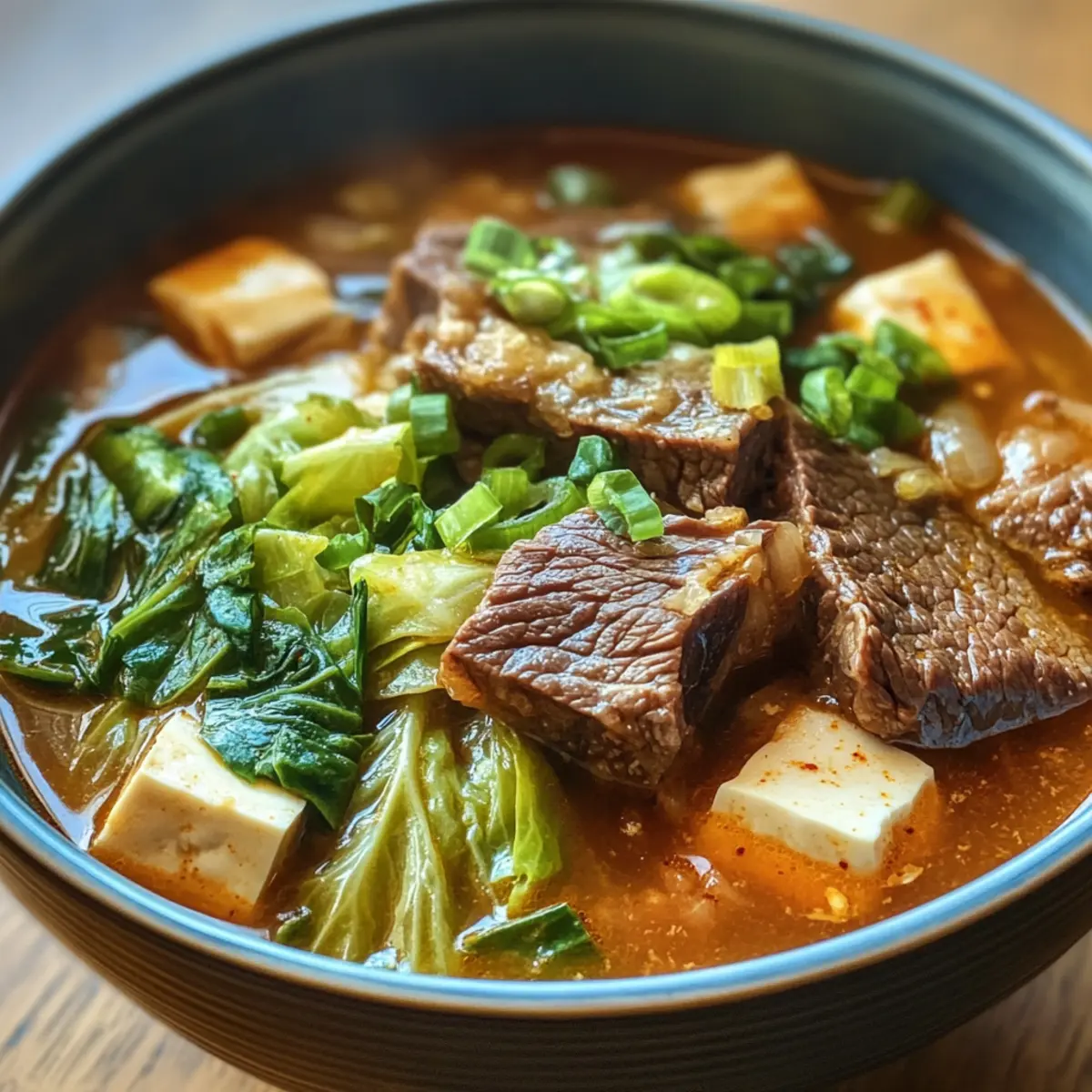
Korean Winter Soup: Hearty Bliss for Cold Days Ahead
Ingredients
Equipment
Method
- In a large pot, add the beef brisket along with enough water to fully submerge it, approximately 6-8 cups. Bring to a boil, then simmer gently for 30 minutes.
- Skim the surface to remove impurities and foam.
- Stir in soy sauce, gochujang, gochugaru, and minced garlic. Simmer for another 10 minutes.
- Add onion, napa cabbage, cubed tofu, and sliced daikon radish. Stir gently and cover the pot. Simmer for an additional 20 minutes.
- In a small pan, heat sesame oil and sauté green onions for about 2 minutes. Add to the soup.
- Season with salt and pepper to taste. Simmer for an additional 5-10 minutes.
- Serve the hot soup in bowls alongside cooked white rice.
Leave a Reply