
The aroma of sizzling chicken fills the kitchen, transporting me straight to the bustling streets of South Korea. Today, I’m excited to share my favorite Dakgalbi recipe, a vibrant stir-fry that marries tender chicken thighs with crunchy vegetables and chewy rice cakes in a spicy, savory sauce. This dish is perfect for a cozy weeknight dinner, taking just a quick 30 minutes to prepare, making it an ideal choice for home-cooks craving a flavorful meal without the fuss. Plus, it invites a communal dining experience, encouraging you to gather loved ones around the table for a shared feast. Are you ready to spice up your dinner routine with this delightful dish?
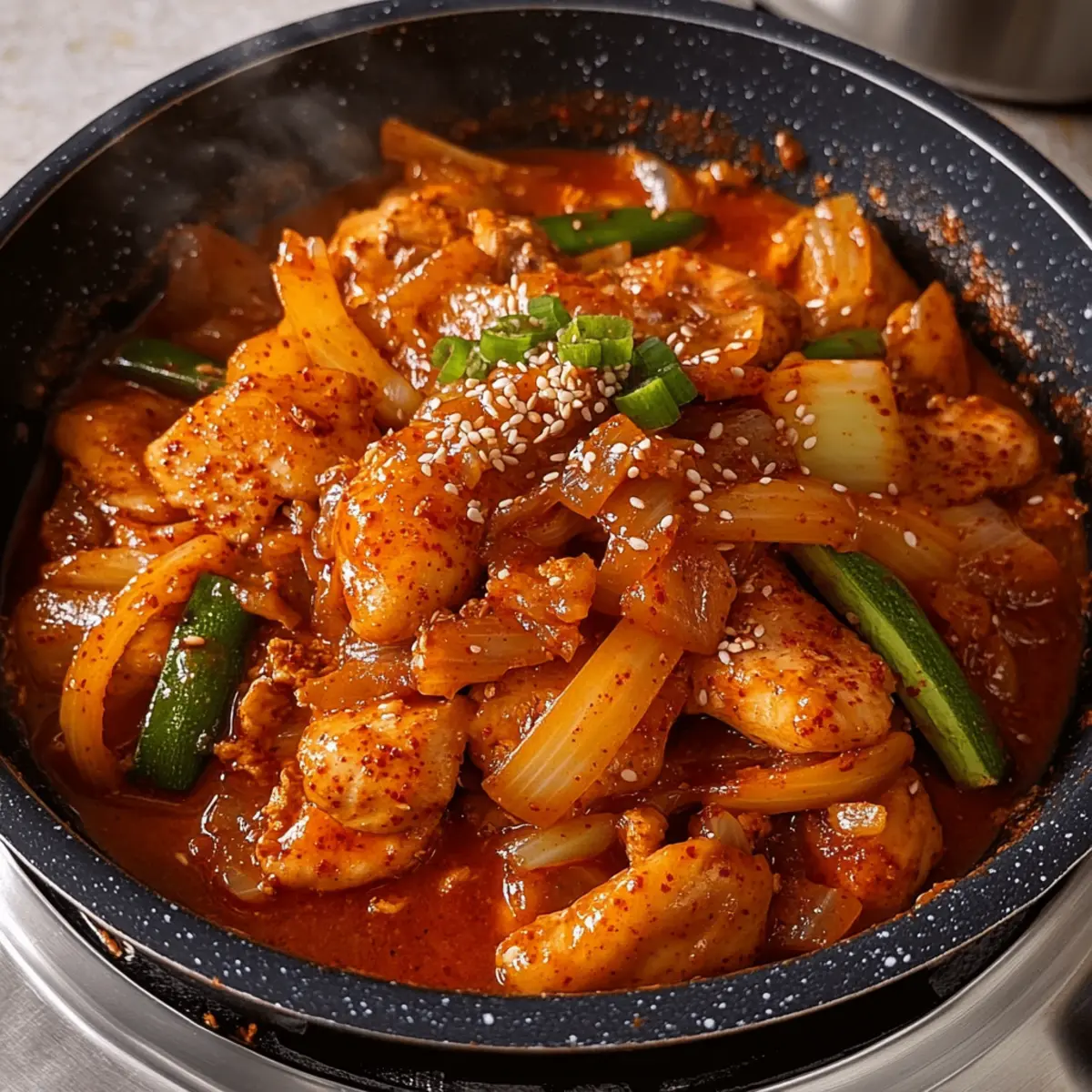
Why is Dakgalbi a Must-Try?
Quick Preparation: In just 30 minutes, you can have a delightful meal on the table, perfect for busy weeknights.
Spicy & Savory: The unique blend of gochujang and other seasonings delivers a wonderful heat that’s just addictive.
Customizable Ingredients: Make it your own by adding favorite vegetables like bell peppers or even some leftover kimchi for an extra kick.
Communal Experience: Dakgalbi’s vibrant presentation makes it a fantastic dish for gatherings, turning dinner into a fun and interactive experience.
Nourishing Comfort: With tender chicken and hearty rice cakes, every bite is a perfect combination of comfort and flavor that will satisfy your cravings! For more delicious ideas, don’t miss my Tiramisu Truffles or Irish Kerry Pie.
Dakgalbi Ingredients
-
For the Chicken
• Chicken Thighs – Tender protein; boneless and skinless for easy cooking. Substitution: Chicken breasts can be used, but thighs provide more flavor and juiciness. -
For the Vegetables
• Onion – Adds sweetness and aromatic flavor. Substitution: Green onions or shallots can be used for milder sweetness.
• Carrot – Provides color and crunch. Substitution: Other crunchy vegetables like bell peppers can be substituted.
• Cabbage – Offers bulk and texture. Substitution: Napa cabbage or bok choy can be used for a different flavor.
• Green Onions – For garnish; adds fresh flavor and color. Note: Chopped cilantro or parsley can be used for a different finish. -
For the Sauce
• Gochujang – Provides the spicy and savory flavor base. Substitution: Sriracha or a less spicy chili paste can be used for milder heat.
• Soy Sauce – Adds umami depth. Note: Use low-sodium soy sauce for a healthier option.
• Rice Wine or Mirin – Enhances flavor profile with sweetness. Substitution: White wine or apple cider vinegar (use less for acidity).
• Sesame Oil – Adds rich, nutty aroma and flavor. Substitution: None recommended for unique flavor.
• Sugar – Helps balance the spiciness. Substitution: Honey or agave syrup can be used for similar sweetness. -
For the Cooking
• Vegetable Oil – For frying; helps to crisp the chicken. Substitution: Canola oil or sesame oil for different flavors.
• Garlic Powder – Enhances flavor depth. Substitution: Fresh minced garlic for stronger flavor.
• Ginger Powder – Adds warmth and spice. Substitution: Fresh ginger (use 3x more than powdered) for a brighter flavor.
• Black Pepper – Provides mild heat. Note: Use white pepper for a slightly different flavor. -
For Serving
• Rice Cakes (Tteok) – Adds chewiness and absorbs sauce flavors. Preparation: Soak in water for 30 minutes before use. Substitute with other types of rice cakes if necessary, though texture may vary.
• Sesame Seeds – For garnish; adds texture and visual appeal. Note: Can omit if not available.
Step‑by‑Step Instructions for Dakgalbi Recipe
Step 1: Soak the Rice Cakes
Begin by soaking the rice cakes in warm water for about 30 minutes to soften them. This is crucial as it helps them absorb the flavors of the sauce later. After soaking, drain the rice cakes and set them aside while you prepare the rest of the ingredients, ensuring they’re ready for the stir-fry.
Step 2: Make the Sauce
In a mixing bowl, whisk together the gochujang, soy sauce, rice wine, sesame oil, sugar, garlic powder, ginger powder, and black pepper. You’re looking for a smooth, well-combined mixture that embodies the bold flavors of your Dakgalbi recipe. Set this sauce aside for a moment as it will bring everything together in the pan.
Step 3: Sauté the Chicken
Heat a tablespoon of vegetable oil in a large skillet or wok over medium-high heat. Once the oil shimmers, add the chicken thighs cut into bite-sized pieces. Stir-fry for about 5-7 minutes, or until the chicken is beautifully browned and cooked through, achieving a slight caramelization that adds depth to your dish.
Step 4: Add the Vegetables
Toss in the chopped onion, carrot, and cabbage, stirring frequently for another 3-4 minutes. You want the vegetables to turn tender yet retain a satisfying crunch, enhancing the texture of your Dakgalbi recipe. The vibrant colors and delightful aromas will fill your kitchen and entice everyone around.
Step 5: Combine Rice Cakes and Sauce
Next, add the soaked rice cakes to the skillet along with the earlier prepared sauce. Mix everything gently to ensure that each piece of chicken and vegetable is well-coated. The rice cakes will begin to absorb the flavors from the sauce, creating a deliciously integrated dish.
Step 6: Final Cooking
Cook for an additional 3-5 minutes, stirring occasionally. This allows the rice cakes to heat through and the sauce to thicken nicely, glistening on the chicken and vegetables. You’ll know it’s ready when everything is harmoniously combined, creating a mouthwateringDakgalbi.
Step 7: Garnish and Serve
Once your Dakgalbi is perfectly cooked, remove it from the heat. Garnish with a sprinkle of sesame seeds and sliced green onions to add a fresh, vibrant touch. Serve immediately, allowing everyone to enjoy this communal dish, perfect for sharing and savoring together!
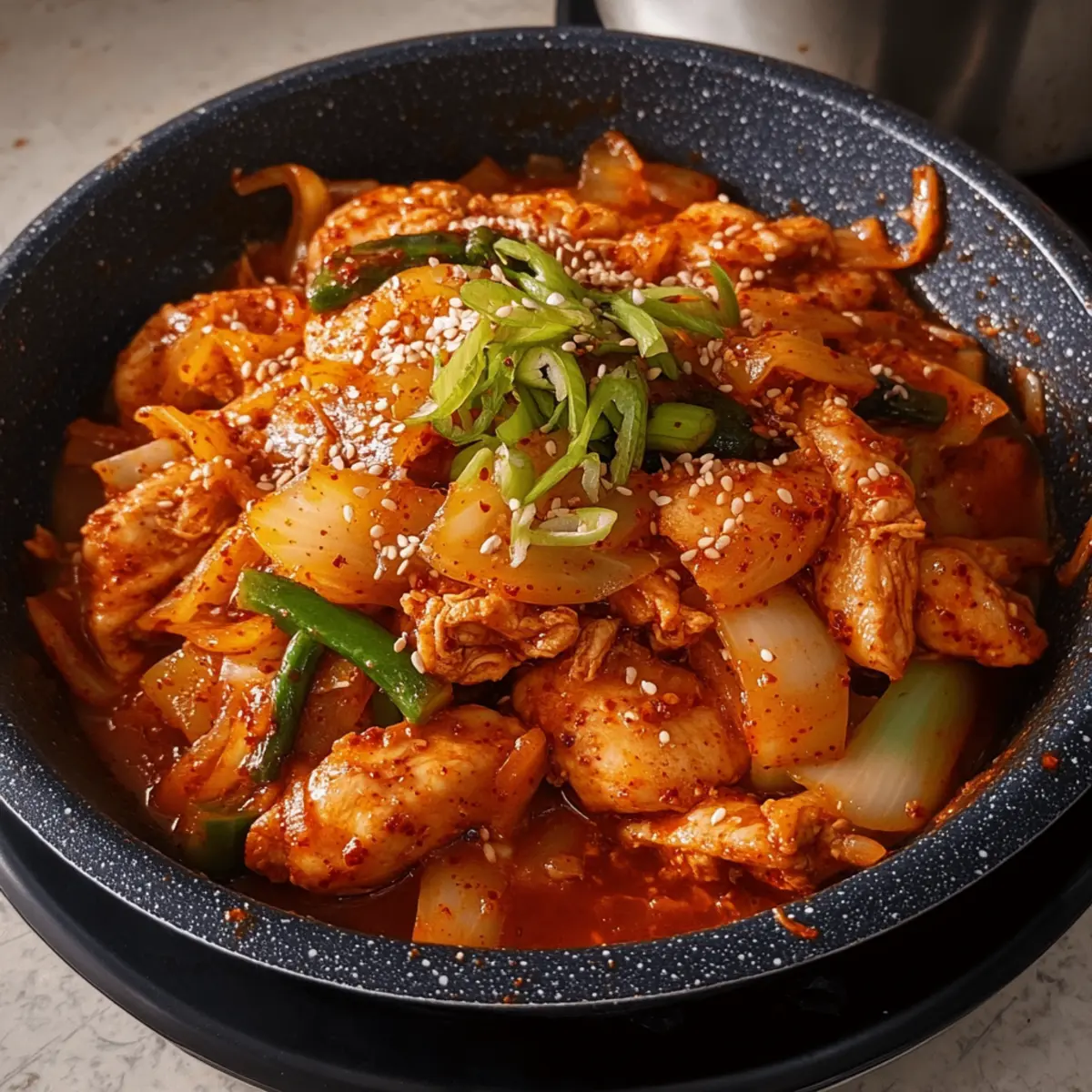
Expert Tips for the Best Dakgalbi
-
Milder Spice Adjustments: Start with a smaller amount of gochujang if you’re sensitive to heat. You can always add more as it cooks.
-
Uniform Chicken Pieces: Cut the chicken thighs into uniform sizes to ensure they cook evenly. This helps avoid any undercooked or overcooked pieces in your dakgalbi.
-
Veggie Variety: Don’t hesitate to mix and match your vegetables. Broccoli, zucchini, or even mushrooms add wonderful flavors and textures to your dakgalbi recipe!
-
Soak Rice Cakes: Always remember to soak the rice cakes for at least 30 minutes. This step is vital for achieving the right chewy texture and allowing them to absorb all the delicious sauce flavors.
-
Leftover Magic: For those tasty leftovers, combine them with cooked rice and some of the remaining sauce to whip up a delicious fried rice the next day!
Dakgalbi Recipe Variations
Feel free to let your creativity shine as you adapt this delightful recipe to suit your taste and ingredients on hand!
- Vegetarian: Replace chicken with firm tofu or tempeh for a hearty plant-based meal. Simply cube and sauté until golden for a satisfying alternative.
- Spicier Kick: For those who crave extra heat, add sliced fresh chilies or a pinch of cayenne pepper while stirring. Every bite will pack a fiery punch!
- Flavorful Add-Ins: Toss in other veggies like zucchini, bell peppers, or snap peas to enhance the color and nutrition. A rainbow plate is always more appealing!
- Sweet Twist: For a hint of sweetness, mix in some diced pineapples or pears as they blend beautifully with the savory sauce. It’s a delightful surprise that elevates the dish.
- Noodle Fusion: Serve Dakgalbi over cooked noodles or substitute the rice cakes with udon or soba for a different texture. It turns into a hearty noodle bowl that’s equally delicious!
- Savory Substitute: If you’re out of gochujang, try using sambal oelek or sriracha for a different flavor profile. Each will provide a different depth of heat!
- Rice Option: Instead of rice cakes, consider using steamed jasmine rice or cauliflower rice for a lighter option that still composes a wonderful base for the dish.
- Kimchi Kick: Adding in a couple of tablespoons of kimchi while stir-frying infuses the dish with an extra tangy flavor that many love. It’s a fun way to enjoy that classic taste!
Now that you’ve got these ideas, make the Dakgalbi your own! And when you have a chance, check out my Cream Cheese Muffins for another cozy homemade treat!
How to Store and Freeze Dakgalbi
Fridge: Store any leftovers in an airtight container in the refrigerator for up to 3 days. Make sure to let the dish cool completely before sealing to prevent moisture buildup.
Freezer: Freeze Dakgalbi in a freezer-safe container for up to 2 months. To maintain the best texture, cool and portion it out before freezing.
Reheating: Reheat gently in a skillet over medium heat, adding a splash of water or broth to prevent drying out. Stir occasionally until heated through.
Texture: When reheating, take care not to overcook as it may affect the tenderness of the chicken and the chewiness of the rice cakes in your Dakgalbi recipe.
What to Serve with Spicy Korean Dakgalbi?
The perfect Dakgalbi calls for delightful accompaniments that elevate the dining experience, creating a rich tapestry of flavors and textures.
-
Steamed Rice: A classic side that balances the spiciness of Dakgalbi, allowing each bite of flavorful chicken and veggies to shine.
-
Lettuce Wraps: Crisp lettuce leaves provide a refreshing, crunchy bite that complements the savory stir-fry wonderfully while adding an interactive element to the meal.
-
Kimchi: This fermented vegetable dish adds a tangy kick that enhances the overall flavor profile, creating a delightful contrast with the spicy Dakgalbi.
-
Spicy Cucumber Salad: A cool, tangy salad with a hint of spice gives a refreshing counterpoint to the hearty stir-fry, making for a perfect palate cleanser.
-
Korean Sweet Potatoes: Sweet and creamy, these not only balance the heat from the Dakgalbi but also offer a comforting, starch-based side to the meal.
-
Banana Milk: For those looking to temper the heat, this sweet and creamy drink is a delightful option, soothing palates while adding a nostalgic touch to the table.
-
Cold Tofu Salad: Silky tofu dressed in a soy-based sauce brings a serene texture and mild flavor, balancing the lively spice of Dakgalbi.
-
Fruit Slices: Freshly cut watermelon or mango not only cleanses the palate but also adds a burst of sweetness, rounding out your meal beautifully.
-
Green Tea: This warm, soothing tea is an ideal beverage choice that harmonizes with the spices and helps to cleanse the palate between bites.
Make Ahead Options
These Spicy Dakgalbi ingredients can be prepped ahead for your convenience! You can marinate the chicken in the gochujang sauce and store it in the refrigerator for up to 24 hours, helping to deepen the flavors. Additionally, chop your vegetables and soak the rice cakes in water for 30 minutes; simply store them in airtight containers in the fridge until you’re ready to cook. When you’re ready to serve, just heat some vegetable oil in a wok, stir-fry the marinated chicken for about 5-7 minutes, and then add the prepped vegetables and rice cakes. This way, you achieve delicious, ready-to-enjoy Dakgalbi on even the busiest nights!
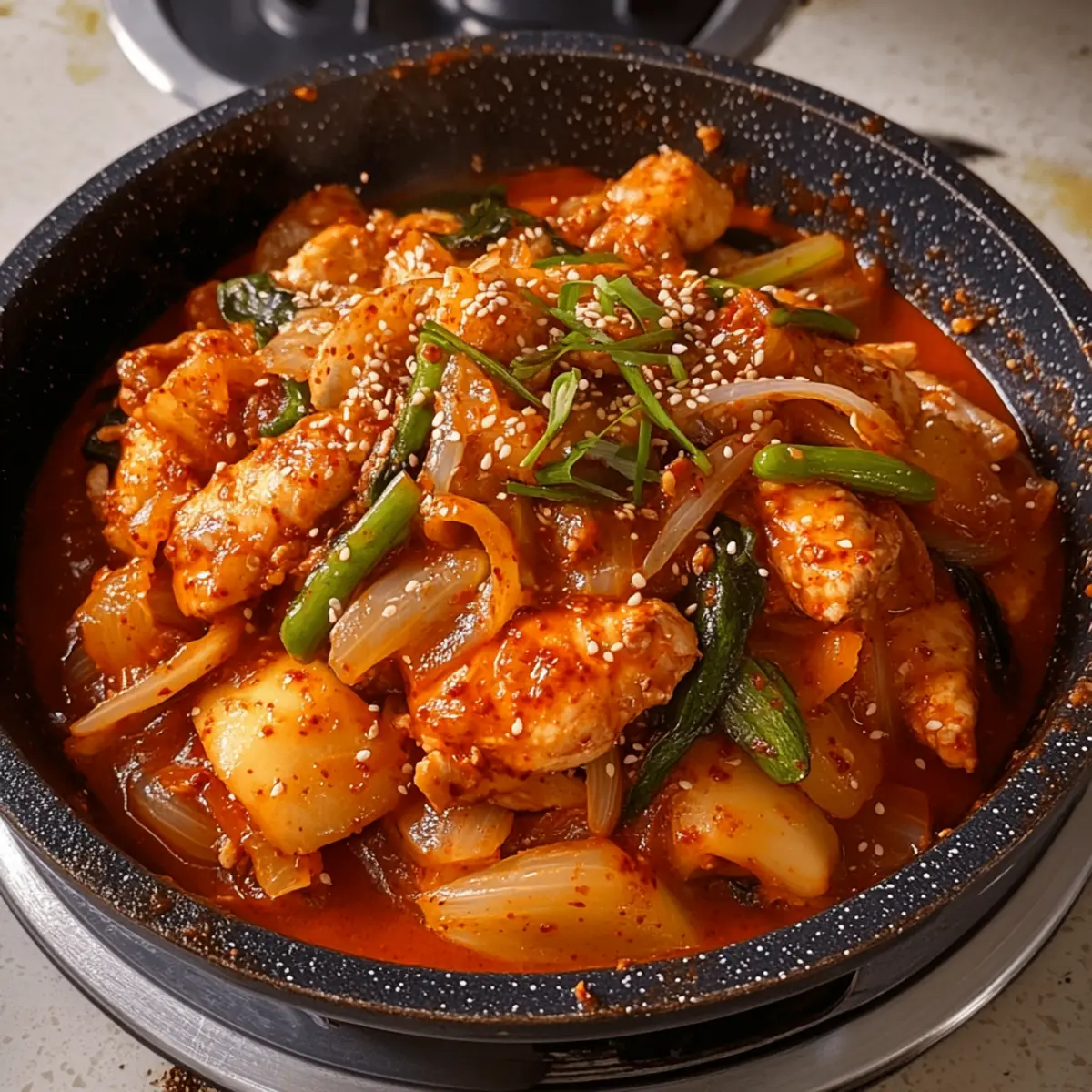
Dakgalbi Recipe FAQs
How do I select ripened ingredients for Dakgalbi?
Absolutely! When choosing vegetables, look for vibrant colors and firm textures. For cabbage and carrots, avoid any wilting or dark spots; fresh produce should have a crisp feel. For the chicken, opt for thighs that are plump and free of any off-putting odors to ensure flavor and juiciness.
What is the best way to store leftover Dakgalbi?
Very! Leftovers should be placed in an airtight container in the refrigerator, where they can last up to 3 days. Ensure the dish has cooled completely before sealing. For optimal freshness, reheat gently on the stove over medium heat, adding a splash of water to maintain moisture.
Can I freeze Dakgalbi?
Absolutely! To freeze Dakgalbi, transfer it to a freezer-safe container, portioned out if desired, and store it for up to 2 months. Let it cool completely before freezing to prevent ice crystals from forming. When you’re ready to enjoy it again, thaw overnight in the refrigerator and then reheat gently.
What should I do if my Dakgalbi is too spicy?
If you find your dish too spicy, don’t fret! You can balance it by adding more vegetables or a spoonful of sugar to offset the heat. A splash of coconut milk or a dollop of sour cream can also help tone it down, providing a creamy contrast.
Are there any dietary considerations for pets or allergies?
Very! It’s important to keep Dakgalbi away from dogs and cats, as ingredients like garlic and onion can be harmful to them. Additionally, if you have allergies, be cautious with soy sauce, as it contains wheat. Look for gluten-free or low-sodium versions to accommodate dietary restrictions.
How can I prevent my rice cakes from becoming mushy?
To ensure your rice cakes retain their chewy texture, remember to soak them in water for just 30 minutes before cooking. Avoid overcooking them in the pan; just stir them until heated through after adding to the dish. This way, they absorb flavor without losing their characteristic bite.
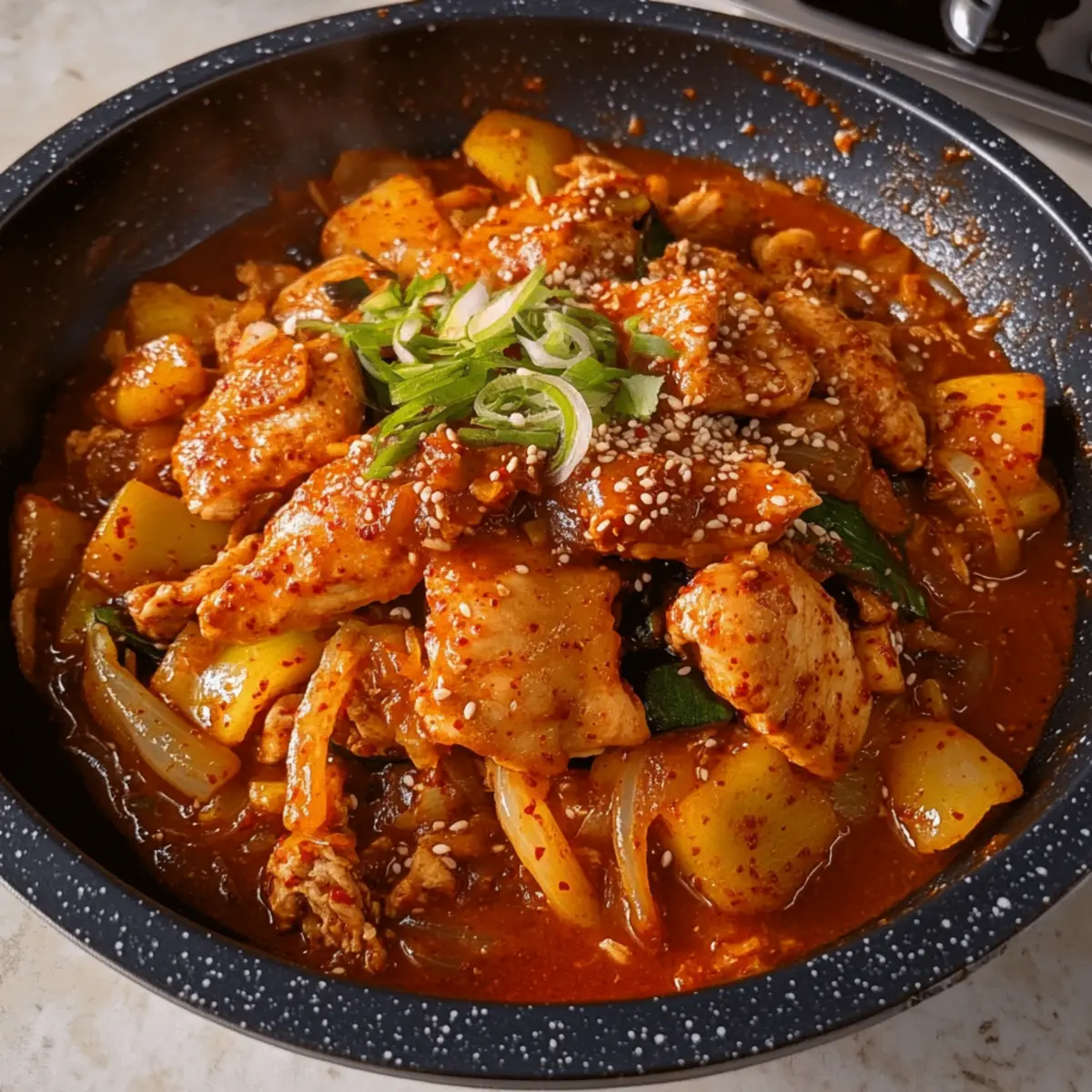
Spicy Dakgalbi Recipe: A Flavorful Delight to Share!
Ingredients
Equipment
Method
- Soak the rice cakes in warm water for about 30 minutes, then drain and set aside.
- In a mixing bowl, whisk together the gochujang, soy sauce, rice wine, sesame oil, sugar, garlic powder, ginger powder, and black pepper.
- Heat vegetable oil in a skillet over medium-high heat. Add chicken thighs cut into bite-sized pieces and stir-fry for 5-7 minutes until cooked through.
- Add chopped onion, carrot, and cabbage. Stir frequently for 3-4 minutes until vegetables are tender yet crunchy.
- Add soaked rice cakes and sauce to the skillet, mix gently to coat everything well.
- Cook for an additional 3-5 minutes until heated through and sauce thickens.
- Garnish with sesame seeds and sliced green onions, then serve immediately.
Leave a Reply